Creatine isn't just for building muscle — your brain burns through it faster than any other organ, and most people are running on empty.
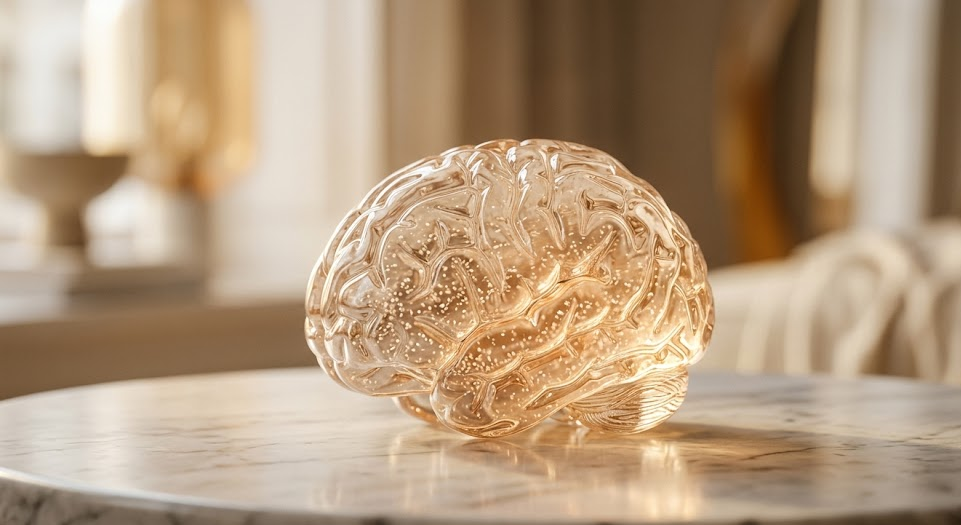
When you hear "creatine," you probably picture gym bros scooping powder into shaker bottles. Fair enough. Creatine monohydrate has been the most researched sports supplement for three decades. But here's what the fitness industry won't tell you: your brain is the single largest consumer of creatine in your body, using up to 20% of your total creatine phosphate stores despite being only 2% of your body weight. And the science on cognitive benefits is stacking up fast.
Researchers at the University of Sydney found that creatine supplementation improved working memory and processing speed in healthy adults by up to 15%. That's not a marginal gain — that's the difference between a foggy afternoon and a sharp one. Let's break down what's actually happening in your neurons.
How Creatine Powers Your Brain at the Cellular Level
Every thought you think, every decision you make, every word you read right now — all of it requires adenosine triphosphate (ATP). Your brain consumes roughly 20% of your body's total energy output, making it the most metabolically demanding organ you have.
Creatine's role is elegantly simple: it donates a phosphate group to ADP (adenosine diphosphate) to regenerate ATP. This happens via the creatine kinase enzyme system, and it's the fastest way your cells can produce energy — faster than glucose metabolism, faster than mitochondrial oxidative phosphorylation.
When brain creatine levels drop, cognitive performance drops with them. A 2018 study published in Experimental Gerontology demonstrated that even mild creatine depletion correlated with measurable declines in short-term memory and attention span. The brain simply cannot afford energy shortages.
The Research: What Creatine Supplementation Actually Does for Cognition
The evidence base for creatine and cognition has grown substantially over the past decade. Here are the key findings that matter:
Working memory improvement: A randomized, double-blind study by Rae et al. (2003) in the Proceedings of the Royal Society B showed that 5g of creatine monohydrate daily for six weeks significantly improved both working memory and intelligence test scores in healthy volunteers. The effect was particularly pronounced during tasks requiring rapid processing.
Sleep deprivation resilience: Research published in Psychopharmacology (McMorris et al., 2006) found that creatine supplementation reduced the negative cognitive effects of 24-hour sleep deprivation. Subjects maintained better executive function and reaction times compared to placebo. If you've ever pulled a late night and felt your brain slow to a crawl the next day, creatine offers a buffer.
Stress-related cognitive decline: A 2007 study in the Royal Society B: Biological Sciences demonstrated that creatine supplementation attenuated mental fatigue during repeated mathematical calculations performed under stress. The creatine group maintained accuracy while the placebo group's performance degraded.
Neuroprotective potential: Emerging research suggests creatine may support brain health during aging. A review in Neuroscience & Biobehavioral Reviews (Roschel et al., 2021) highlighted creatine's potential role in supporting mitochondrial function and reducing oxidative stress in neural tissue — two mechanisms closely linked to age-related cognitive decline.
Who Benefits Most From Brain-Focused Creatine Supplementation
While creatine appears to benefit cognition broadly, certain groups see outsized results:
Vegetarians and vegans: Since creatine is found primarily in animal products (red meat and fish), people following plant-based diets typically have 20-30% lower baseline creatine stores. Research from the British Journal of Nutrition (2011) showed that vegetarians experienced the most significant cognitive improvements from creatine supplementation — essentially closing the gap caused by dietary deficiency.
Older adults: Age-related decline in creatine synthesis is well-documented. A meta-analysis in Experimental Gerontology (2020) found that creatine supplementation in adults over 60 improved both memory performance and reasoning tasks. The effect sizes were clinically meaningful, not just statistically significant.
High-stress professionals: If your work demands sustained mental performance — think surgeons, programmers, financial analysts, founders — creatine supplementation may help maintain cognitive output during extended periods of mental exertion. The ATP regeneration mechanism doesn't discriminate between physical and mental energy demands.
Anyone dealing with poor sleep: Combined with good sleep hygiene and proper magnesium supplementation, creatine can help buffer the cognitive costs of less-than-perfect sleep. Not a replacement for rest, but a meaningful support system.
Dosage, Timing, and What the Science Actually Recommends
The most studied protocol for cognitive benefits mirrors the athletic dosing: 3-5 grams of creatine monohydrate daily. There's no need for a loading phase when targeting cognitive benefits — consistent daily intake allows brain creatine stores to saturate over approximately 3-4 weeks.
Timing matters less than consistency. Unlike pre-workout supplements that need precise timing, creatine's cognitive benefits come from maintaining elevated brain creatine stores over time. Take it when you'll remember to take it — with breakfast, in your afternoon smoothie, mixed into your morning coffee. The key is daily adherence.
Quality matters enormously here. Ultra-micronized creatine monohydrate dissolves more completely and absorbs more efficiently than standard creatine powder. The particle size reduction means better solubility and fewer digestive complaints — a common barrier that causes people to quit supplementation before brain stores fully saturate.
What about creatine forms? Despite marketing claims for creatine HCl, buffered creatine, and creatine ethyl ester, the evidence overwhelmingly supports plain creatine monohydrate as the most effective and best-studied form. The International Society of Sports Nutrition's position stand is unambiguous on this point.
The Creatine-Brain Stack: Synergistic Supplements for Cognitive Performance
Creatine works through the ATP energy system, but optimal cognitive function requires support across multiple pathways. Here's what research suggests pairs well:
Creatine + Alpha-GPC: While creatine handles energy supply, Alpha-GPC supports acetylcholine production — the neurotransmitter directly involved in memory formation and learning. A study in the Journal of the International Society of Sports Nutrition found that Alpha-GPC enhanced both physical and cognitive performance markers. Combining it with creatine addresses two distinct bottlenecks in brain performance.
Creatine + B-Vitamins: Creatine synthesis in the body requires methylation, a process that depends heavily on B-vitamins — particularly B6, B12, and folate. Without adequate B-vitamin status, your body's endogenous creatine production suffers. A high-quality bioactive B-complex supports the methylation cycle that feeds creatine biosynthesis.
Creatine + Magnesium: Magnesium is a cofactor for the creatine kinase enzyme — the very enzyme that transfers phosphate groups from creatine to regenerate ATP. Low magnesium levels literally impair creatine's mechanism of action. Ensuring adequate magnesium intake with a comprehensive magnesium supplement helps creatine do its job more effectively.
Common Myths About Creatine and Brain Health — Debunked
"Creatine causes water retention and bloating." Creatine does increase intracellular water content — inside muscle cells. This is actually a positive sign of cellular hydration. The "puffy" look some people report typically comes from poor-quality creatine with large particle sizes or excessive sodium in the formulation. Ultra-micronized creatine monohydrate minimizes this issue significantly.
"Creatine is bad for your kidneys." This myth persists despite being thoroughly debunked. A comprehensive review in the Journal of the International Society of Sports Nutrition (2017) examined dozens of studies and concluded that creatine supplementation at recommended doses does not impair kidney function in healthy individuals.
"Only athletes need creatine." This is perhaps the most damaging myth. Given that the brain is creatine's primary consumer, arguing that only athletes need it is like saying only runners need oxygen. Anyone with a brain has a metabolic need for creatine.
"You can get enough creatine from food." To match the 3-5g daily dose used in studies, you'd need to eat roughly 1-2 pounds of raw red meat or fish daily. Cooking degrades a significant portion of creatine content. Supplementation is the only practical way to achieve and maintain optimal brain creatine levels.
How to Start: A Practical Protocol for Cognitive Enhancement
If you're new to creatine supplementation for brain health, here's a straightforward approach:
Week 1-4 (Saturation): Take 5g of ultra-micronized creatine monohydrate daily with a meal. The food improves absorption. Don't skip days during this phase — consistency is what builds brain creatine stores.
Week 5+ (Maintenance): Continue with 3-5g daily. Most researchers recommend staying at 5g for cognitive benefits, as brain saturation may require slightly higher ongoing doses than muscle saturation.
Track your baseline. Before starting, note your current mental performance — afternoon energy levels, ease of focusing during complex work, memory recall during meetings. After 4-6 weeks of consistent supplementation, reassess.
Combine strategically. Pair creatine with adequate sleep, proper hydration (aim for at least 2.5L daily — consider a quality water bottle to keep you honest), and a nutrient-dense diet. No supplement compensates for fundamentals, but creatine amplifies the benefits of getting them right.
Frequently Asked Questions
Does creatine supplementation improve memory and focus in healthy adults?
Yes. Multiple randomized controlled trials demonstrate that creatine monohydrate supplementation at 3-5g daily improves working memory, processing speed, and mental endurance in healthy adults. Effects are most pronounced during cognitively demanding situations and after 3-4 weeks of consistent supplementation when brain creatine stores reach saturation.
Is creatine safe for long-term daily use?
Creatine monohydrate is one of the most extensively studied supplements in existence, with research spanning over 30 years. The International Society of Sports Nutrition and the European Food Safety Authority have confirmed its safety for long-term use at recommended doses (3-5g daily) in healthy individuals.
How long does it take for creatine to improve cognitive performance?
Brain creatine stores take approximately 3-4 weeks of daily supplementation (5g/day) to reach saturation. Some individuals report noticeable improvements in mental clarity and reduced brain fog within 2 weeks, though the full cognitive benefits typically manifest after the saturation period.
Can creatine help with brain fog and mental fatigue?
Research strongly suggests yes. Brain fog and mental fatigue are often linked to impaired cerebral energy metabolism. Creatine directly supports ATP regeneration in neural tissue, which may explain why supplementation reduces mental fatigue during demanding cognitive tasks.
What is the best form of creatine for brain health?
Creatine monohydrate remains the gold standard. Despite marketing claims for newer forms like creatine HCl or buffered creatine, no alternative form has demonstrated superior bioavailability or effectiveness in peer-reviewed research. Ultra-micronized creatine monohydrate offers the best combination of proven effectiveness, optimal absorption, and minimal digestive discomfort.
Should vegetarians and vegans take creatine for cognitive benefits?
Vegetarians and vegans are among the groups most likely to benefit from creatine supplementation. Because creatine is found almost exclusively in animal products, plant-based individuals typically have significantly lower creatine stores — 20-30% lower than omnivores.