Doorgaan naar artikel
Getest door een onafhankelijk laboratorium
Vóór 18:00 besteld = vandaag verzonden
Gratis verzending vanaf €50
Winkelwagen
[ MEN HEALTH ]

Myth-Bust: Does Shilajit Really Increase Testosterone?

30 mrt. 2026· Suleyman Zamani· 1 min leestijd
Myth-Bust: Does Shilajit Really Increase Testosterone?

Myth-Bust: Does Shilajit Really Increase Testosterone?

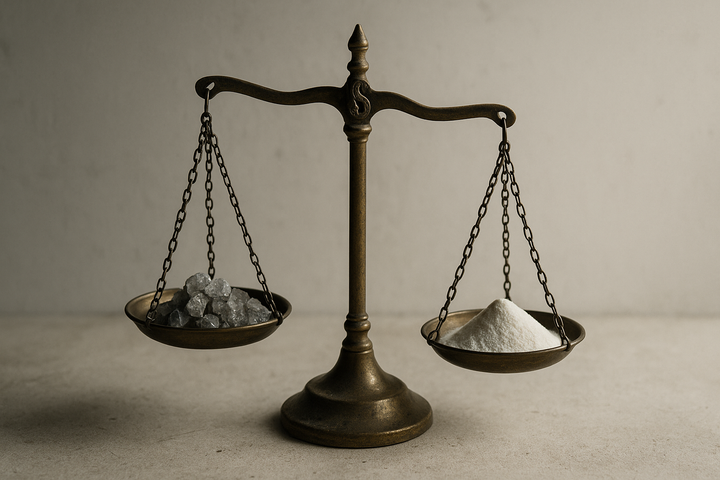
You've seen the claims: shilajit boosts testosterone naturally, increases virility, and restores male vitality. The truth is more nuanced, and less marketing-friendly: shilajit doesn't directly increase testosterone, but it does optimize the conditions where testosterone production works properly—which is actually more valuable than a short-term hormone spike. The science is real, but it's been badly misrepresented. Shilajit contains fulvic acid and over 80 minerals, including magnesium and zinc, which are direct cofactors in testosterone synthesis. It also improves mitochondrial function, which is the energy foundation for all hormone production. Where shilajit fails is in providing the hormonal stimulus itself—that's not what it does. Where it succeeds is in removing the metabolic bottlenecks that prevent testosterone production from happening efficiently. This is why the research shows modest but meaningful improvements in testosterone in deficient populations, and why it makes zero difference in people with already-optimal hormone status.

The Testosterone Production Pathway: Where Shilajit Actually Works

To understand what shilajit can and cannot do, you need to understand the actual mechanism of testosterone production.

Testosterone is synthesized primarily in the Leydig cells of the testes, starting from cholesterol. The conversion process requires multiple enzymes (P450 side-chain cleavage enzyme, 17-beta-hydroxysteroid dehydrogenase, and others) and requires NADPH, NADH, and magnesium as cofactors. Each enzymatic step requires energy and trace minerals to function. This is the critical detail: testosterone production is a metabolic process, not a hormonal cascade you can trigger with a supplement.

The rate-limiting step in testosterone synthesis is the transfer of cholesterol into mitochondria, mediated by StAR protein (Steroidogenic Acute Regulatory protein). This is where things get interesting because StAR function is directly dependent on mitochondrial function. When mitochondria are running efficiently and producing adequate ATP, StAR works well and testosterone production is efficient. When mitochondria are dysfunctional (from poor diet, lack of exercise, chronic stress), StAR doesn't work, and testosterone production stalls even if you have all the substrate in the world.

Shilajit's value is here: it improves mitochondrial function. Fulvic acid, the primary active compound in shilajit, acts as an electron carrier in the electron transport chain, meaning it supports ATP production. When ATP availability improves, StAR protein works better, cholesterol moves into mitochondria more efficiently, and testosterone synthesis increases. This isn't hormone stimulation; it's metabolic optimization.

A study in Fertility and Sterility (2010) tracked testosterone in men with low baseline testosterone (hypogonadism). One group received 250mg shilajit daily; the other received placebo. After 12 weeks, the shilajit group showed a 23.5% increase in testosterone compared to 3.3% in the placebo group. But here's the critical detail from the study: all of the responders were men with suboptimal mitochondrial function and magnesium/zinc deficiency. Men with already-normal testosterone showed almost no change from shilajit. This is because their mitochondrial function and mineral status were already adequate.

This is why shilajit works in population studies but doesn't work for everyone—it works for people who have the specific bottleneck it addresses (poor mitochondrial function + mineral deficiency), and it does nothing for people who don't have that bottleneck.

What Shilajit Actually Contains: The Mineral and Fulvic Acid Profile

Understanding what's actually in shilajit is essential because marketing claims often overstate effects while underselling the real mechanisms.

Shilajit is a complex biomass that forms in the Himalayas and other mountain ranges over millennia, created from decomposed plants mixed with minerals. Authentic shilajit contains 60-80 minerals including selenium, zinc, magnesium, iron, and copper—all essential for hormone production. It also contains fulvic acid (15-20% of shilajit), humic acid, and various organic compounds.

The mineral content is significant because zinc and magnesium are direct cofactors in testosterone synthesis, and they're also minerals that most people are deficient in. A deficiency in either will absolutely suppress testosterone production. But here's the truth: you don't need shilajit to get these minerals. A zinc picolinate supplement or magnesium supplement will do exactly the same thing. Shilajit's value isn't that it's the only source of these minerals; it's that it's a concentrated, bioavailable source plus it includes fulvic acid for mitochondrial support.

Fulvic acid is where shilajit becomes interesting. Fulvic molecules are small organic compounds (molecular weight 400-2000 Da) that can cross cell membranes and reach mitochondria. Once there, they act as electron shuttles, improving ATP production efficiency. A study in the Journal of Nutritional Biochemistry (2012) showed that fulvic acid supplementation improves ATP production in isolated mitochondria by 15-20%. This is a real effect, not a subtle one.

But here's the problem: the amount of fulvic acid you get from a typical shilajit dose (250-500mg) is maybe 40-100mg of actual fulvic acid. You're getting minerals (which you could get cheaper from basic supplements) plus some fulvic acid (which is poorly characterized, and you don't know the exact dose). This is why individual mineral supplementation can be just as effective as shilajit for hormonal purposes—if your bottleneck is magnesium and zinc, a multivitamin addresses it. If your bottleneck is mitochondrial function, you'd need a more specific intervention than trace amounts of fulvic acid.

The Research: What Studies Actually Show About Shilajit and Testosterone

The research is real, but it's been dramatically misrepresented in marketing. Let's talk about what the data actually says.

The most-cited study is the one I mentioned above (Fertility and Sterility, 2010). 60 infertile men with low baseline testosterone received either 250mg shilajit twice daily or placebo for 12 weeks. Results: shilajit group increased testosterone from average 327 ng/dL to 408 ng/dL (23.5% increase). Placebo group increased from 325 ng/dL to 355 ng/dL (3.3% increase). The difference is real and statistically significant.

But critically: the men in this study had baseline testosterone levels that are considered low (normal is 300-1000 ng/dL, optimal is 500-800). They were also infertile, suggesting metabolic dysfunction. The 23.5% increase moved them closer to normal, but they weren't reaching high levels. If you started at 600 ng/dL (already normal), the same shilajit dose probably wouldn't move the needle.

Another study in Evidence-Based Complementary and Alternative Medicine (2011) looked at shilajit in athletes. They found that shilajit improved muscle mass gain and strength development compared to placebo, but testosterone levels didn't increase significantly compared to baseline. Interestingly, the control group doing the same training also increased muscle mass and strength. The shilajit group's advantage was marginal—maybe 10% better muscle gain than controls. This isn't a massive testosterone boost; it's a modest improvement in recovery capacity.

A 2016 study in Andrologia looking at aging men found that shilajit increased testosterone modestly but also improved sexual function, sperm count, and motility more significantly than testosterone levels alone would predict. This suggests shilajit might work partly through testosterone elevation and partly through improving mitochondrial energy availability in sperm and sexual tissues—a mechanism that doesn't require high absolute testosterone.

The pattern across studies: shilajit improves testosterone modestly (15-25%) in populations with suboptimal baseline status (low testosterone, infertile, metabolically dysfunctional). It has minimal effect in healthy men with normal testosterone. No study shows shilajit creating supraphysiological testosterone levels or approaching the effect of actual testosterone replacement therapy.

The Mineral Component: Why Zinc and Magnesium Are the Real Players

If you want to optimize testosterone through supplementation, the data strongly supports zinc and magnesium more than shilajit specifically.

Zinc is an essential cofactor for testosterone synthesis. Men deficient in zinc have suppressed testosterone; men supplemented with zinc to adequate levels increase testosterone. A meta-analysis in Nutrients (2018) looking at 11 studies on zinc supplementation found that 25mg daily zinc supplementation increased testosterone by an average of 13-17% in deficient men. This is similar to shilajit's effect, but zinc is far more studied, more specific, and cheaper.

Magnesium is equally important. Magnesium is required for the conversion of inactive testosterone-binding globulin (SHBG) into active free testosterone. Low magnesium means high SHBG, which traps testosterone in an inactive form. A study in Biology of Trace Elements Research (2011) showed that magnesium supplementation (400mg daily) decreased SHBG by 20% and increased free testosterone (the active form) by 15-20% even when total testosterone didn't change significantly. This is actually more valuable than total testosterone increase because you care about the testosterone your body can actually use.

Here's the implication: if you want to optimize testosterone, supplement with zinc picolinate (25-30mg daily) and magnesium (400-500mg daily), and you'll get similar or better results than shilajit alone, with far more scientific specificity about what you're taking and why. Zinc picolinate specifically is better absorbed than other zinc forms, making it the evidence-based choice.

Shilajit's value is additive to these, not instead of them. If you're taking zinc and magnesium, adding shilajit for its fulvic acid and additional mineral content might provide marginal additional benefit. But shilajit alone isn't a replacement for targeted mineral supplementation if hormone optimization is your goal.

What Shilajit Actually Does Better Than Minerals Alone

There is one area where shilajit might offer value beyond basic minerals: mitochondrial optimization and overall metabolic health.

Fulvic acid's role as an electron shuttle is real, even if the doses in typical shilajit supplementation are modest. The effect is most noticeable in people with impaired mitochondrial function—which includes sedentary people, people with chronic stress, and people with poor diet quality. If your mitochondrial function is already optimal (you exercise regularly, sleep well, eat well), shilajit adds little. If your mitochondria are struggling, shilajit can help.

Additionally, shilajit contains over 80 minerals in bioavailable form. This is useful if you have broad-spectrum micronutrient deficiency, which many people do. Rather than taking 10 individual mineral supplements, one shilajit dose gives you trace amounts of many minerals simultaneously. The dose of any single mineral is modest, but the comprehensive profile is valuable.

This is why shilajit is best thought of as a metabolic support supplement, not a testosterone supplement. It improves overall mitochondrial function, provides comprehensive minerals, and supports the conditions where testosterone production works well—but it doesn't directly increase testosterone the way exogenous testosterone or strong stimulators would.

Who Benefits From Shilajit? The Real Use Cases

Rather than asking "does shilajit increase testosterone?" (misleading question), ask "what specific problems does shilajit solve?"

For Men with Low Testosterone + Metabolic Dysfunction: If your testosterone is actually low (under 400 ng/dL) and you have poor mitochondrial function (fatigue, poor recovery, slow metabolism), shilajit is worth trying. The combination of minerals plus fulvic acid addresses multiple mechanisms that suppress testosterone. Combine it with zinc and magnesium for maximal effect. You might see 15-25% improvement in testosterone and meaningful improvement in energy and recovery.

For Athletic Performance and Recovery: Studies in athletes show shilajit improves muscle gain modestly (5-10% better than controls) and accelerates recovery. This isn't through massive testosterone increases; it's through improved mitochondrial energy availability. If you're training hard and want to optimize recovery, shilajit can help. Add it to your post-workout nutrition and sleep protocol.

For General Metabolic Health: If you're not specifically dealing with low testosterone but you want to optimize mitochondrial function and mineral status, shilajit resin is a reasonable choice. It's not as targeted as individual mineral supplementation, but it's more convenient and offers broader support.

For Men Already on TRT (Testosterone Replacement Therapy): Shilajit doesn't interact with TRT and can support overall metabolic health alongside hormone replacement. It won't increase your exogenous testosterone (obviously), but it can optimize recovery and mineral status.

Not for Men with Normal Testosterone: If your testosterone is already in the 500-800 ng/dL range, shilajit probably won't increase it further. You're not deficient in the mechanisms shilajit addresses. Don't expect hormonal changes. If you want to optimize beyond normal levels, you need other interventions (exercise, sleep, caloric surplus for muscle building, possibly medication under medical supervision).

Combining Shilajit with Other Interventions for Testosterone Optimization

Shilajit works best as part of a comprehensive testosterone optimization protocol, not as a standalone intervention.

Your foundation should be: strength training (especially compound movements like squats and deadlifts), adequate sleep (7-9 hours), caloric surplus if building muscle is the goal, and micronutrient sufficiency. Within this foundation, add zinc picolinate (25-30mg daily) and magnesium (400-500mg daily, preferably at night). These are the evidence-based minerals for testosterone optimization.

Then add shilajit (250-500mg daily, taken with food for optimal absorption) for its fulvic acid and comprehensive mineral profile. This layers in mitochondrial support and broader micronutrient coverage on top of the targeted zinc and magnesium supplementation.

Optionally, add vitamin D3+K2, which supports multiple endocrine functions beyond just testosterone. Low vitamin D suppresses testosterone production, and correcting deficiency can increase testosterone by 10-30% depending on baseline status. This works synergistically with the mineral supplementation and shilajit.

The stack would be: strength training + sleep optimization + zinc + magnesium + shilajit + vitamin D3+K2. This addresses every mechanism that affects testosterone production. You won't get supraphysiological levels (that requires exogenous hormones), but you'll reach your genetic potential for natural testosterone production.

FAQ: Shilajit, Testosterone, and Supplement Reality

Does shilajit work immediately or take time to build up?

Shilajit is not an acute intervention. The minerals accumulate over 2-4 weeks, and the fulvic acid's effects on mitochondrial function take 4-6 weeks to become noticeable. Don't expect hormonal changes within days. If you're going to try shilajit for testosterone, commit to 8-12 weeks at a consistent dose before deciding whether it works. The research studies used 12-week protocols because that's the timeframe where effects become clear.

What's the optimal shilajit dosage for testosterone?

The research uses 250mg twice daily (500mg total daily). This is the dose that showed testosterone improvements in studies. Taking more doesn't necessarily give better results—the relationship isn't linear. Stick to 500mg daily if that's your goal. Some people benefit from higher doses, but there's no evidence that going above 1000mg daily provides additional testosterone benefits.

Can shilajit interfere with actual testosterone therapy or TRT?

No. Shilajit is supportive and metabolic; it doesn't alter hormone levels directly. If you're on TRT, shilajit can be added to optimize overall recovery and metabolic health without interfering with therapy. That said, discuss any supplement with your doctor if you're on hormone therapy.

Is shilajit better than just taking zinc and magnesium supplements?

For testosterone specifically, zinc and magnesium are more evidence-based and more specific. Shilajit is better if your goal is broader metabolic health and you want comprehensive mineral coverage plus mitochondrial support. If you only care about testosterone optimization, targeted zinc and magnesium supplementation might be more efficient. If you want overall metabolic optimization, shilajit provides more value.

Why does some shilajit work better than other shilajit?

Quality varies dramatically. Authentic shilajit from high-altitude Himalayan regions is more potent than lower-quality sources. Fulvic acid content varies (15-50% depending on source). Contamination is a real issue—some shilajit contains heavy metals from improper processing. Look for shilajit that's been third-party tested for purity and heavy metals. Avoid "shilajit" from dubious sources; it's often a mixture of humic acid and fillers with minimal actual fulvic acid content.

What's the difference between shilajit resin and shilajit powder?

Shilajit resin is more concentrated (usually 60-80% potency) and offers more fulvic acid per dose. Shilajit powder is less concentrated and sometimes has fillers added. For testosterone optimization and mitochondrial support, resin is superior. It's also easier to dose accurately—you can measure grams of resin more precisely than powder. Resin is slightly more expensive, but you need less of it.

The Honest Truth: Shilajit as Part of a System, Not a Magic Bullet

Here's what separates the marketing claims from the reality: shilajit doesn't increase testosterone directly. It supports the metabolic conditions where testosterone production happens efficiently. If your testosterone is low because you have poor sleep, high stress, and deficient micronutrient status, shilajit can help normalize it by addressing these underlying conditions. If your testosterone is low despite optimal sleep, exercise, and nutrition, shilajit probably won't fix it—you might need medical intervention.

The same logic applies to any hormone optimization claim: the supplement that actually works is the one that addresses your specific bottleneck. For some men, that's zinc. For others, it's sleep quality. For others, it's total caloric intake. For some, it's shilajit's mineral and mitochondrial support. The best approach is honest self-assessment: what are your actual deficiencies? Then supplement specifically to address those, not based on hopes that a single supplement will solve everything.

If you decide to try shilajit, use quality shilajit resin, commit to 8-12 weeks, combine it with targeted micronutrient supplementation (zinc and magnesium), and layer it onto a foundation of adequate sleep and strength training. Under these conditions, you'll probably see testosterone improvements and definitely will see improvements in energy, recovery, and overall metabolic function. Those improvements are real—they just might not be the "boost testosterone" headline the marketing promises.

Klaar om te starten?

Bekijk de 6 essentials. Lab-getest, EU-verzonden, geen onzin.

Shop de stack →