Most antioxidant supplements can’t cross the blood-brain barrier — molecular hydrogen can, and it does so within minutes.
If you’ve been paying attention to the cutting edge of longevity research, you’ve likely come across molecular hydrogen (H₂). It’s the smallest and lightest molecule in existence, yet over 2,000 scientific publications suggest it may be one of the most versatile therapeutic agents we’ve ever studied. Unlike conventional antioxidants that neutralize free radicals indiscriminately, H₂ appears to selectively target the most damaging reactive oxygen species while leaving beneficial signaling molecules intact. That distinction matters more than most people realize.
What Is Molecular Hydrogen and Why Should You Care?
Molecular hydrogen is simply two hydrogen atoms bonded together (H₂) — a colourless, odourless, tasteless gas. When dissolved in water, it creates hydrogen-rich water that delivers H₂ directly to your cells. What makes it remarkable isn’t its chemistry on paper but its behaviour inside the body.
H₂ is so small it can penetrate cell membranes, enter mitochondria, and even cross the blood-brain barrier without requiring any transport mechanism. A 2007 landmark study published in Nature Medicine by Ohsawa et al. demonstrated that inhaling hydrogen gas selectively reduced cytotoxic oxygen radicals — specifically hydroxyl radicals (•OH) and peroxynitrite (ONOO⁻) — while preserving hydrogen peroxide (H₂O₂) and nitric oxide (NO), which serve essential signaling functions in the body.
This selectivity is what separates molecular hydrogen from vitamin C, vitamin E, or other conventional antioxidants. Those molecules neutralize free radicals broadly, which sounds great until you realize your body actually needs some reactive oxygen species for immune function, cell signaling, and exercise adaptation. H₂ appears to target only the destructive ones.
The Science: How Molecular Hydrogen Works at the Cellular Level
Understanding how H₂ works requires looking beyond simple antioxidant theory. Research suggests molecular hydrogen operates through multiple mechanisms simultaneously:
Selective antioxidant activity: As established by Ohsawa et al. (2007) in Nature Medicine, H₂ selectively scavenges hydroxyl radicals — the most cytotoxic reactive oxygen species produced during oxidative stress — without disrupting beneficial ROS signaling pathways.
Nrf2 pathway activation: A 2017 study in Oxidative Medicine and Cellular Longevity found that H₂ activates the Nrf2 signaling pathway, which upregulates your body’s own endogenous antioxidant enzymes including superoxide dismutase (SOD), catalase, and glutathione peroxidase. In other words, H₂ doesn’t just fight oxidative stress directly — it teaches your cells to fight it themselves.
Anti-inflammatory signaling: Research published in Biochemical and Biophysical Research Communications showed that H₂ downregulates pro-inflammatory cytokines including TNF-α, IL-6, and IL-1β. This makes it relevant for anyone dealing with chronic low-grade inflammation — which, according to current research, includes most adults over 30.
Mitochondrial protection: Because H₂ freely penetrates mitochondrial membranes, it can protect these energy-producing organelles at the source. A study in Medical Gas Research (2011) demonstrated that hydrogen-rich water supported mitochondrial membrane potential and ATP production under oxidative stress conditions.
Molecular Hydrogen for Exercise Performance and Recovery
Athletes and fitness enthusiasts are among the earliest adopters of hydrogen-rich water, and the research supports their interest. Exercise generates a surge of reactive oxygen species that contributes to fatigue, delayed-onset muscle soreness, and prolonged recovery times.
A 2012 pilot study published in Medical Gas Research examined ten male soccer players who consumed hydrogen-rich water for one week. The results showed that those drinking hydrogen-rich water experienced reduced blood lactate levels and decreased markers of exercise-induced muscle fatigue compared to the placebo group.
A separate study in the Journal of Sports Medicine and Physical Fitness (2014) found that hydrogen-rich water consumption before exercise supported peak power output and reduced perceived exertion during high-intensity protocols.
The proposed mechanism is straightforward: by selectively neutralizing the most damaging exercise-induced free radicals while preserving the beneficial ones needed for training adaptation, H₂ may allow for better recovery without blunting the hormetic benefits of exercise. This is a critical distinction — you don’t want to completely eliminate exercise-induced ROS because they drive mitochondrial biogenesis and muscle adaptation. You want to remove the excess that causes unnecessary damage.
Combining Molecular Hydrogen Tablets with Creatine Monohydrate creates a synergistic approach — creatine for ATP regeneration and power output, molecular hydrogen for targeted oxidative stress management and recovery.
Brain Health and Neuroprotection: Where H₂ Really Shines
Perhaps the most exciting area of molecular hydrogen research is neuroprotection. The brain consumes roughly 20% of the body’s oxygen supply yet has relatively weak endogenous antioxidant defences, making it particularly vulnerable to oxidative damage.
Because H₂ crosses the blood-brain barrier effortlessly — something most antioxidant supplements simply cannot do — it has unique potential for brain health applications. A 2010 study in Neuroscience Letters found that hydrogen-rich water consumption supported cognitive function in animal models of neurodegenerative stress by reducing oxidative markers in brain tissue.
Research from Nagoya University published in the Journal of Clinical Biochemistry and Nutrition (2019) conducted a randomised, double-blind, placebo-controlled trial with 13 participants and found that drinking hydrogen-rich water for 4 weeks was associated with improvements in mood and reduced markers of central nervous system inflammation.
For those already stacking nootropics, molecular hydrogen pairs particularly well with Alpha-GPC 600mg for cholinergic support and Magnesium 7-in-1 for neuronal relaxation and sleep quality — creating a comprehensive brain health protocol.
Gut Health and Systemic Inflammation
The gut-body connection is no longer a fringe concept — it’s central to understanding chronic disease. Molecular hydrogen research has expanded significantly into gastrointestinal health.
A 2018 study in Medical Gas Research demonstrated that hydrogen-rich water supported intestinal barrier integrity and reduced markers of gut-derived systemic inflammation in human subjects. The researchers noted decreased levels of circulating lipopolysaccharides (LPS), which are endotoxins released by gram-negative bacteria that trigger widespread inflammatory cascades when they enter the bloodstream through a compromised gut lining.
This is particularly relevant for anyone dealing with post-meal bloating, food sensitivities, or the low-grade inflammation that often accompanies modern diets high in processed foods and omega-6 fatty acids. By supporting intestinal barrier function and reducing gut-derived inflammation, H₂ addresses the upstream cause rather than just managing downstream symptoms.
Additionally, a study in World Journal of Gastroenterology (2017) found that hydrogen-rich water modulated the gut microbiome composition, supporting the growth of beneficial bacterial strains while reducing potentially harmful populations.
How to Use Molecular Hydrogen Tablets: Dosage and Timing
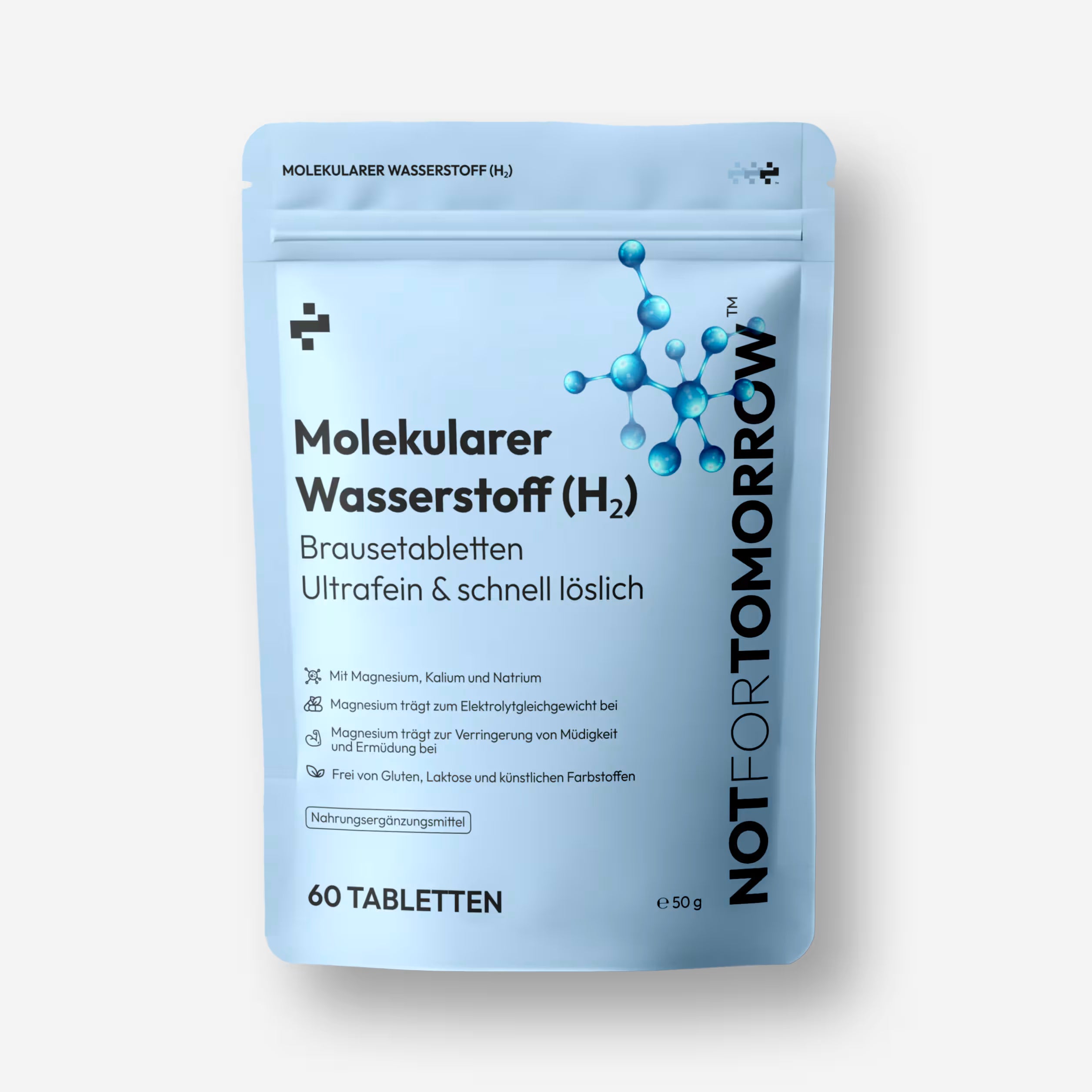
The most practical way to consume molecular hydrogen is through effervescent tablets that dissolve in water. NOTFORTOMORROW Molecular Hydrogen Tablets dissolve in 250-500ml of water, producing hydrogen-rich water with a high concentration of dissolved H₂.
Here’s the evidence-based protocol most studies use:
Daily maintenance: 1 tablet dissolved in 300-500ml of water, consumed in the morning on an empty stomach. Most research uses concentrations between 0.5 and 1.6 mg/L of dissolved hydrogen, which is the range achieved by quality effervescent tablets.
Pre-workout: 1 tablet 20-30 minutes before training. This timing allows H₂ to reach peak tissue concentration before exercise-induced oxidative stress occurs.
Recovery protocol: 1 tablet immediately post-workout alongside your regular recovery nutrition.
Important practical tips: Drink the hydrogen-rich water promptly after the tablet fully dissolves. H₂ is a gas and will escape from the water over time — a sealed container like a MagBotl Water Bottle helps maintain concentration. Don’t add anything else to the water (no lemon, no electrolytes) as this can interfere with the dissolution process and H₂ concentration.
Molecular Hydrogen vs. Other Antioxidants: Why Selectivity Matters
The supplement market is flooded with antioxidant products — vitamin C, vitamin E, resveratrol, NAC, astaxanthin. So why consider molecular hydrogen?
The answer lies in selectivity and bioavailability. Conventional antioxidants have two significant limitations:
1. They’re non-selective. Vitamin C, for example, neutralizes free radicals indiscriminately. While this sounds beneficial, your body uses certain reactive oxygen species (like hydrogen peroxide) for essential immune functions, gene expression regulation, and exercise adaptation. Wiping them all out can actually impair these processes.
2. Many can’t reach where they’re needed most. Most antioxidants are too large to cross the blood-brain barrier or penetrate mitochondrial membranes efficiently. They work in the bloodstream and extracellular spaces but can’t protect the organelles most vulnerable to oxidative damage.
Molecular hydrogen solves both problems. It selectively targets only the most destructive radicals (hydroxyl and peroxynitrite) while leaving beneficial signaling molecules intact. And its tiny size means it reaches every compartment of every cell — including the mitochondria and nucleus — within minutes of consumption.
This doesn’t mean you should abandon other antioxidants entirely. Vitamin C still supports collagen synthesis, immune function, and iron absorption through mechanisms unrelated to its antioxidant activity. The point is that molecular hydrogen fills a niche that no other antioxidant supplement currently occupies.
Frequently Asked Questions About Molecular Hydrogen
What are the proven benefits of molecular hydrogen tablets?
Over 2,000 scientific publications have studied molecular hydrogen. Research suggests H₂ supports selective antioxidant activity (targeting hydroxyl radicals while preserving beneficial ROS), activates the Nrf2 pathway to boost endogenous antioxidant production, reduces pro-inflammatory cytokines, supports mitochondrial function, and may contribute to improved exercise recovery and cognitive function.
How do you take molecular hydrogen tablets?
Dissolve one tablet in 300-500ml of plain, room-temperature water in a sealed container. Wait until the tablet has fully dissolved (usually 1-2 minutes), then drink promptly. For general wellness, take one tablet daily on an empty stomach in the morning.
Is molecular hydrogen safe to consume daily?
Molecular hydrogen has an excellent safety profile. It’s naturally produced by gut bacteria during fibre fermentation. Multiple human clinical trials have used daily hydrogen-rich water consumption for periods ranging from 4 weeks to 6 months without reporting adverse effects. The FDA has granted molecular hydrogen GRAS (Generally Recognized As Safe) status as a food additive.
Can molecular hydrogen cross the blood-brain barrier?
Yes — this is one of its most significant advantages over other antioxidant supplements. H₂ is the smallest molecule in existence, allowing it to freely diffuse across all biological membranes including the blood-brain barrier, cell membranes, and mitochondrial membranes without requiring any transport proteins.
What is the difference between molecular hydrogen and hydrogen water?
Hydrogen water is simply water that has been infused with dissolved molecular hydrogen gas (H₂). Molecular hydrogen tablets create hydrogen water by reacting with water to release H₂ gas that dissolves into the liquid. The key factor is the concentration of dissolved hydrogen — effective therapeutic doses typically range from 0.5 to 1.6 mg/L.
Can you combine molecular hydrogen with other supplements?
Absolutely. Molecular hydrogen works through unique mechanisms that complement other supplements rather than competing with them. Popular stacks include H₂ with creatine monohydrate, Alpha-GPC, magnesium, and vitamin D3+K2. Because H₂ is selective in its antioxidant activity, it won’t interfere with beneficial oxidative signaling.
How quickly does molecular hydrogen work after consumption?
Molecular hydrogen reaches peak blood concentration within approximately 5-15 minutes after drinking hydrogen-rich water. Due to its extremely small molecular size, it rapidly diffuses throughout all body tissues including the brain. The dissolved H₂ is typically cleared from the body within 30-60 minutes, which is why consistent daily consumption is recommended.