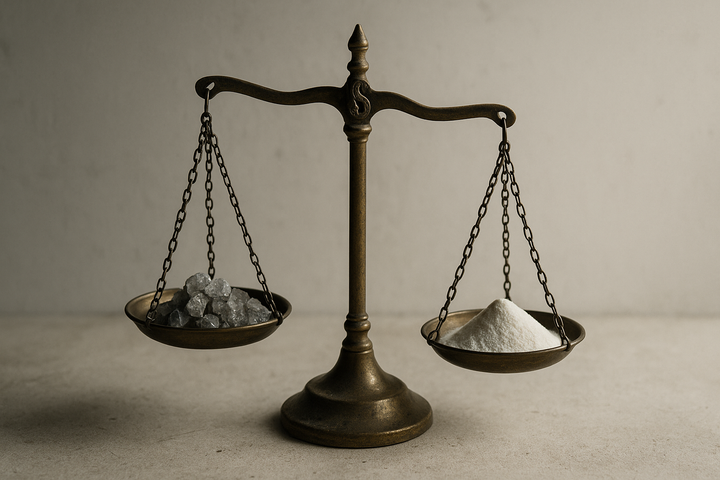
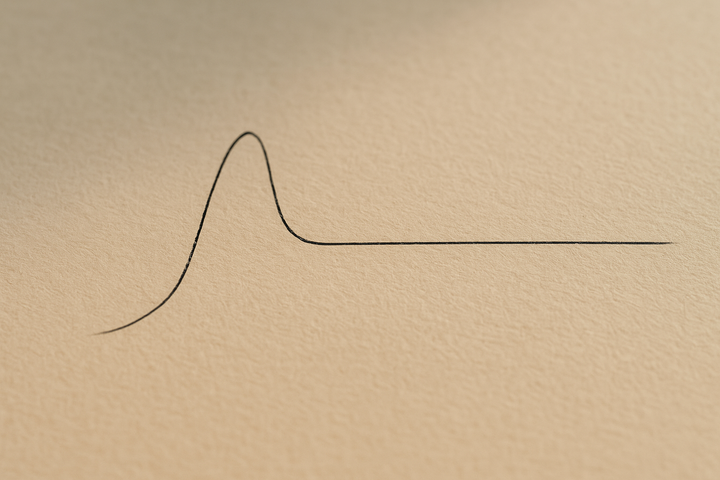
Caffeine and L-theanine work better together because each one softens the other's weakness. Caffeine sharpens alertness by blocking the brain's "slow down" signal, but on its own it can bring jitters, a racing feeling, and a later dip. L-theanine, an amino acid found naturally in tea, is associated with a calm, relaxed state of mind without sedation. In controlled studies, the two taken together produced steadier attention and a smoother, more focused feeling than caffeine alone. The pairing is described here factually: neither caffeine nor L-theanine carries an authorised EU health claim, so no health benefit is claimed for them. In a supplement such as FocusFuel the only authorised claims come from the added vitamins B6 and B12.

The short answer
Caffeine is a stimulant. L-theanine is a calming amino acid. Used together in a modest ratio, research suggests L-theanine takes the rough edges off caffeine: you keep the lift in alertness while feeling less wired. The effect is real but modest, most consistent for attention and subjective alertness in acute studies, and it depends on the dose and the ratio. It is not a substitute for sleep, and it is not a medicine. This article explains the mechanism, weighs the evidence honestly, and sets out what a sensible dose looks like.
What caffeine actually does
Caffeine is the most widely used stimulant in the world. Its main trick is simple: it looks enough like a molecule called adenosine to slip into adenosine's receptors in the brain and sit there without activating them. Adenosine normally builds up through the day and makes you feel drowsy, so by blocking it, caffeine holds off the sensation of tiredness and raises alertness (Nobre et al., 2008; Camfield et al., 2014).
That is the upside. The downside is that caffeine is a blunt instrument. Push the dose up, or take it on an empty stomach or a sensitive day, and the same alertness can tip into jitteriness, a racing heartbeat, and a scattered rather than focused feeling. Many people also notice a dip once the effect wears off. Sensitivity varies a lot between individuals, partly because of how quickly each person clears caffeine.
What L-theanine is and what it does
L-theanine is an amino acid found almost exclusively in the tea plant (Camellia sinensis) and in a few mushrooms. It is one of the reasons a cup of green tea feels calmer than the same amount of caffeine from coffee. Structurally it resembles glutamate, a signalling molecule in the brain, and it can cross into the brain after you take it (Nobre et al., 2008).
In studies, L-theanine on its own is associated with a relaxed but awake state, sometimes measured as a rise in alpha brain-wave activity, a pattern linked to calm, wakeful attention rather than drowsiness (Nobre et al., 2008). On its own it is not a stimulant and does not make you sleepy at typical doses. Its more interesting role shows up when it is combined with caffeine.
Why the two together beat either one alone
Several controlled trials have tested caffeine and L-theanine separately and side by side. The recurring finding is that the combination supports attention and a sense of alert focus more consistently than caffeine alone, while L-theanine appears to blunt some of caffeine's less pleasant effects.
- In a double-blind study, the combination improved speed and accuracy on attention-switching tasks and reduced susceptibility to distraction more than either compound alone (Owen et al., 2008).
- Another placebo-controlled trial found the combination improved performance on demanding cognitive tasks and reduced mental fatigue and mind-wandering during the work (Haskell et al., 2008).
- A further study reported that L-theanine plus caffeine improved accuracy and increased subjective alertness while reducing tiredness (Giesbrecht et al., 2010).
- Work on attention specifically found that the combined dose sharpened selective attention beyond what either ingredient managed alone (Kahathuduwa et al., 2017).
The proposed mechanism is a kind of balance. Caffeine provides the push toward alertness by blocking adenosine, and L-theanine provides a counterweight of calm, so the net feeling is focused rather than frantic. A brain-blood-flow and mood study by Dodd and colleagues (2015) supported the idea that the two interact rather than simply adding up.

The evidence, weighed honestly
It would be easy to oversell this. So here is the honest version. A systematic review and meta-analysis of tea constituents concluded that caffeine and L-theanine, alone and together, can influence attention and mood, but that effect sizes are generally small and vary between studies and tasks (Camfield et al., 2014). A more recent systematic review and meta-analysis reached a similar measured conclusion: there are signals for cognition and mood, but the evidence base is heterogeneous and mostly built on single-dose studies in healthy adults (Payne et al., 2025).
In plain terms: the pairing is one of the better-studied combinations in the focus category, and the direction of the evidence is favourable, but it is a gentle nudge, not a transformation. It works best as a cleaner, calmer version of a caffeine hit, not as a way to buy performance you have not earned through sleep, food, and training.
Ratio and dose: what the research actually used
The studies above did not use random amounts. Most used caffeine in the range of roughly 50 to 100 mg (about the caffeine in a small cup of coffee) paired with L-theanine at roughly 100 to 200 mg, so the theanine dose is often one to two times the caffeine dose. That ratio matters: too little theanine and you are essentially taking caffeine; a generous theanine share is what appears to smooth the experience.
FocusFuel is built around this logic. Each sugar-free lozenge provides 40 mg of natural caffeine, and the recommended daily serving of two lozenges provides 80 mg of caffeine together with 120 mg of L-theanine. That puts the daily caffeine near a single cup of coffee and the theanine at one and a half times the caffeine, inside the band the research has used. Because you take one lozenge at a time, you can start with 40 mg and see how you respond before reaching for a second.
Where the B vitamins fit in
Caffeine and L-theanine are the focus of this article, but they are not the part of the formula that can carry a health claim. FocusFuel also supplies vitamin B6 (as pyridoxine) and vitamin B12 (as methylcobalamin), and these vitamins do have authorised EU claims. Vitamins B6 and B12 contribute to normal psychological function, to the normal functioning of the nervous system, and to the reduction of tiredness and fatigue (Regulation (EU) No 432/2012). The daily serving covers 100% of the reference intake for B6 and 192% for B12.
This is an important distinction and worth stating plainly. When we describe caffeine and L-theanine, we are reporting what research has observed, not making a claim. When we say a product supports normal psychological function or helps reduce tiredness, that language is reserved for the B vitamins, because those are the claims the EU has authorised. If you want to understand why the bioactive forms of these vitamins are used, our article on why all eight B vitamins are combined in one complex goes deeper.
Is it safe, and how much is too much?
Caffeine has been studied extensively for safety. The European Food Safety Authority concluded that single doses of up to 200 mg of caffeine, and habitual intakes of up to 400 mg per day, do not raise safety concerns for healthy adults (EFSA, 2015). A daily serving of FocusFuel provides 80 mg, well within that range, but caffeine adds up: a coffee, a tea, an energy drink, and a focus supplement in the same afternoon can push you toward the ceiling.
A few sensible rules:
- Do not exceed the recommended dose of two lozenges per day.
- Count your other caffeine. The 80 mg here is on top of whatever coffee or tea you have already had.
- Mind the timing. Caffeine can linger for hours, so a late-afternoon dose can disturb sleep even if you feel fine.
- FocusFuel is not recommended for children, for pregnant or breastfeeding women, or for people who are sensitive to caffeine.
If jitters or a racing feeling are exactly what you are trying to avoid, the theanine share is on your side, but individual sensitivity to caffeine still rules. Start low.

How it compares to a cup of coffee
An obvious question: why not just drink coffee? Coffee delivers caffeine, but it contains no L-theanine, so it gives you the push without the counterweight. Green tea and matcha do contain both, which is why tea often feels calmer, but the amounts are low and variable, and you would need several cups to reach the caffeine and theanine doses used in the research.
A lozenge format changes three things: the dose is fixed and known, the caffeine and theanine come in a deliberate ratio, and you can take it anywhere without water. It is also sugar-free and dissolves in the mouth. None of that makes it work better than the ingredients themselves; it simply makes the studied combination easy to take in a measured amount. If the idea of steadier energy without a stimulant spike appeals to you, our piece on building a non-stimulant focus stack looks at the calmer end of the spectrum.
Frequently Asked Questions
Does L-theanine cancel out caffeine?
No. L-theanine does not block or neutralise caffeine's alertness effect. In studies, the alertness from caffeine remains while L-theanine appears to reduce some of the jittery, over-stimulated feeling. Think of it as balancing rather than cancelling (Owen et al., 2008; Haskell et al., 2008).
What is the best ratio of caffeine to L-theanine?
Research most often used L-theanine at one to two times the caffeine dose, with caffeine around 50 to 100 mg. FocusFuel's daily serving of 80 mg caffeine to 120 mg L-theanine sits inside that band. There is no single perfect ratio, and personal response varies.
Will caffeine plus L-theanine make me jittery?
The whole reason people pair them is that L-theanine tends to smooth caffeine's edge. That said, if you are highly sensitive to caffeine, even 40 to 80 mg can feel like a lot. Starting with one lozenge lets you gauge your own response.
Can I take it in the evening?
It is best avoided late in the day. Caffeine can stay active in the body for several hours and disturb sleep, and L-theanine does not remove the caffeine, it only changes how the alertness feels. Keep it to the morning or early afternoon.
Does the combination help with focus for studying or work?
Studies point to better attention and a steadier, more alert feeling on demanding tasks, with modest effect sizes (Camfield et al., 2014; Payne et al., 2025). It can be a useful, measured pick-me-up, but sleep, food, and breaks matter far more for sustained focus.
Is 80 mg of caffeine a lot?
It is roughly the caffeine in one small cup of coffee, and well within the 400 mg per day that EFSA considers safe for healthy adults (EFSA, 2015). The key is to count all your caffeine sources across the day, not just this one.
The Bottom Line
Caffeine and L-theanine are a genuinely well-studied pair, and the reason they work better together is straightforward: caffeine pushes you toward alertness, L-theanine pulls you back toward calm, and the meeting point tends to feel more like focus than a stimulant rush. The evidence is favourable but modest, best thought of as a cleaner caffeine experience rather than a shortcut. In FocusFuel, that pairing is delivered in a measured ratio, 80 mg caffeine to 120 mg L-theanine per daily serving, alongside vitamins B6 and B12, which are the ingredients here that carry authorised claims for normal psychological function and the reduction of tiredness. Take it sensibly, count your caffeine, and it can be a calm, precise way to sharpen a demanding hour. You can read the full formula on the FocusFuel product page, and see how B6 and B12 fit into a wider energy picture in our bioactive vitamin B-complex. For a single lozenge on a heavy work day, the studied combination is right there in the FocusFuel lozenges.
Sources
- Owen GN, Parnell H, De Bruin EA, Rycroft JA. The combined effects of L-theanine and caffeine on cognitive performance and mood. Nutritional Neuroscience, 2008. https://pubmed.ncbi.nlm.nih.gov/18681988/
- Haskell CF, Kennedy DO, Milne AL, Wesnes KA, Scholey AB. The effects of L-theanine, caffeine and their combination on cognition and mood. Biological Psychology, 2008. https://pubmed.ncbi.nlm.nih.gov/18006208/
- Giesbrecht T, Rycroft JA, Rowson MJ, De Bruin EA. The combination of L-theanine and caffeine improves cognitive performance and increases subjective alertness. Nutritional Neuroscience, 2010. https://pubmed.ncbi.nlm.nih.gov/21040626/
- Kahathuduwa CN, Dassanayake TL, Amarakoon AMT, Weerasinghe VS. Acute effects of theanine, caffeine and theanine-caffeine combination on attention. Nutritional Neuroscience, 2017. https://pubmed.ncbi.nlm.nih.gov/26869148/
- Camfield DA, Stough C, Farrimond J, Scholey AB. Acute effects of tea constituents L-theanine, caffeine, and epigallocatechin gallate on cognitive function and mood: a systematic review and meta-analysis. Nutrition Reviews, 2014. https://pubmed.ncbi.nlm.nih.gov/24946991/
- Dodd FL, Kennedy DO, Riby LM, Haskell-Ramsay CF. A double-blind, placebo-controlled study evaluating the effects of caffeine and L-theanine both alone and in combination on cerebral blood flow, cognition and mood. Psychopharmacology, 2015. https://pubmed.ncbi.nlm.nih.gov/25761837/
- Nobre AC, Rao A, Owen GN. L-theanine, a natural constituent in tea, and its effect on mental state. Asia Pacific Journal of Clinical Nutrition, 2008. https://pubmed.ncbi.nlm.nih.gov/18296328/
- Payne ER et al. Effects of Tea (Camellia sinensis) or its Bioactive Compounds l-Theanine or l-Theanine plus Caffeine on Cognition, Sleep, and Mood in Healthy Participants: A Systematic Review and Meta-Analysis of Randomized Controlled Trials. Nutrition Reviews, 2025. https://pubmed.ncbi.nlm.nih.gov/40314930/
- EFSA Panel on Dietetic Products, Nutrition and Allergies. Scientific Opinion on the safety of caffeine. EFSA Journal 2015;13(5):4102. https://doi.org/10.2903/j.efsa.2015.4102
- Commission Regulation (EU) No 432/2012 establishing a list of permitted health claims made on foods. Official Journal of the European Union, 2012. https://eur-lex.europa.eu/legal-content/EN/TXT/?uri=CELEX:32012R0432