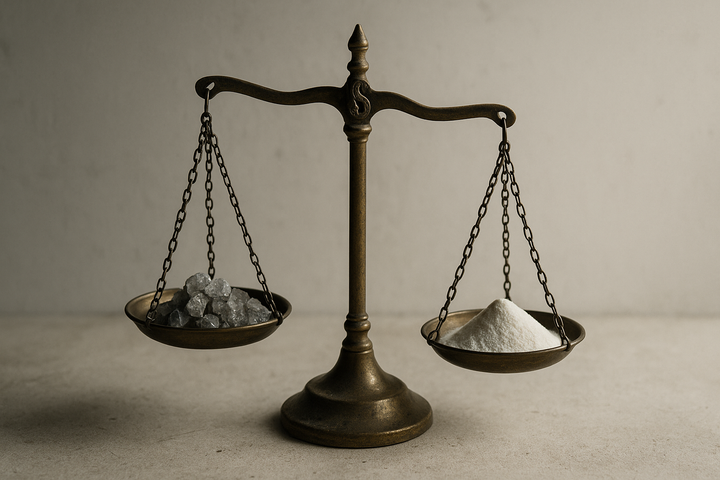
Kort samengevat. Creatine is een natuurlijke stof die vooral in de spieren wordt opgeslagen. Het helpt ATP te herstellen, het energiemolecuul dat wordt gebruikt bij korte, intense inspanningen. Creatine monohydraat is de meest onderzochte vorm, en van andere vormen is niet aangetoond dat ze beter werken. De énige toegestane EU-claim is dat creatine de lichamelijke prestatie verhoogt bij opeenvolgende uitbarstingen van kortdurende, hoogintensieve inspanning, voor volwassenen die hoogintensieve inspanning leveren, in de context van een dagelijkse inname van 3 g. Dit is informatie, geen medisch advies.
Wat is creatine en waar komt het vandaan?
Creatine is een stof die uit aminozuren wordt gevormd. Het lichaam maakt zelf een kleine hoeveelheid aan, vooral in de lever en de nieren, en het zit ook in voeding zoals vlees en vis. Ongeveer vijfennegentig procent van de voorraad in het lichaam bevindt zich in de skeletspieren, waar het grotendeels als fosfocreatine wordt bewaard. Eén supplement vult deze bestaande voorraad eenvoudigweg aan; het brengt niets lichaamsvreemds in.
Omdat de spier de belangrijkste opslagplaats is, hangt de hoeveelheid die iemand draagt af van de voeding, de spiermassa en individuele verschillen. Mensen die weinig of geen vlees of vis eten, beginnen meestal vanuit één lagere uitgangswaarde.
Hoe werkt creatine in het lichaam?
Bij korte, zware inspanningen draaien spiercellen op één molecuul dat ATP heet. ATP geeft energie vrij wanneer het één fosfaatgroep verliest en ADP wordt. Om bij hoge intensiteit te blijven samentrekken, moet de cel ATP snel opnieuw opbouwen, en fosfocreatine is daarvoor de snelste manier ter plaatse: het geeft zijn fosfaatgroep aan ADP om ATP te herstellen. Eén grotere voorraad fosfocreatine betekent dat dit snelle hergebruik iets langer kan worden volgehouden voordat de cel op tragere energieroutes moet terugvallen. Dit is het mechanisme achter de éne toegestane EU-claim, die beperkt is tot herhaalde uitbarstingen van korte, hoogintensieve inspanning en is gesteld in de context van een dagelijkse inname van 3 g voor volwassenen die hoogintensieve inspanning leveren.
Het is goed om precies te zijn over wat dit niet betekent. Creatine wordt op verschillende andere gebieden onderzocht, waaronder cognitie en herstel, maar dit zijn geen toegestane gezondheidsclaims in de EU en het bewijs daarvoor is nog voorlopig. We noemen ze alleen om eerlijk te zijn over de grens tussen één goedgekeurde claim en lopend onderzoek.
Creatine monohydraat versus andere vormen
Creatine bestaat in verschillende chemische vormen. Ze verschillen in hoe de creatine gebonden en op de markt gebracht wordt, niet in wat ze worden na opname: het blijft creatine. De tabel hieronder is ter informatie.
| Vorm | Wat het is | Algemeen kenmerk (informatief) |
|---|---|---|
| Creatine monohydraat | Creatine gebonden aan één watermolecuul | De meest onderzochte vorm, goed oplosbaar met voldoende water, de gebruikelijke referentie |
| Creatine hydrochloride (HCl) | Creatine gebonden aan één hydrochloridegroep | Beter oplosbaar in water, vermarkt voor kleinere doses, maar niet aangetoond beter dan monohydraat |
| Creatine ethylester | Eén veresterde vorm van creatine | Aangeprezen voor opname, maar onderzoek toont geen voordeel boven monohydraat |
| Gebufferde creatine | Creatine met één toegevoegd alkalisch middel | Vermarkt als milder, zonder consistent bewijs van superioriteit boven monohydraat |
De praktische conclusie is eenvoudig: monohydraat is de best onderzochte en meest geteste vorm, en van nieuwere vormen is niet aangetoond dat ze efficiënter zijn. Het zijn vooral verschillen in prijs, oplosbaarheid en marketing.
Hoe wordt dosering van creatine algemeen benaderd?
Dosering wordt meestal in twee patronen besproken. Eén laadbenadering gebruikt gedurende een korte periode een hogere dagelijkse hoeveelheid, verdeeld over de dag, om de spiervoorraad sneller te vullen, gevolgd door een kleinere onderhoudshoeveelheid. Eén dagelijkse benadering slaat het laden over en gebruikt een vaste dagelijkse hoeveelheid, waarbij een vergelijkbare voorraad geleidelijker over enkele weken wordt bereikt. Beide routes kunnen de spiervoorraad vullen; laden is vooral sneller, niet beter. De toegestane EU-prestatieclaim is gesteld in de context van een dagelijkse inname van 3 g voor volwassenen die hoogintensieve inspanning leveren. We beschrijven deze patronen ter verduidelijking en schrijven geen persoonlijke dosis voor: volg het etiket van het product en de lokale richtlijnen, en vraag een arts of apotheker over jouw situatie.
Wie gebruikt creatine doorgaans?
Creatine wordt het meest geassocieerd met volwassenen die herhaalde korte, hoogintensieve inspanning leveren, wat de doelgroep en context van de toegestane claim is. Mensen die weinig vlees of vis eten merken soms meer verandering, simpelweg omdat hun beginvoorraad lager is. Het is geen stimulerend middel en geeft geen energie op de manier van een drank met cafeïne; het ondersteunt het snelle energiesysteem dat hierboven is beschreven. Zoals bij elk supplement past het bij de ene routine en het ene doel beter dan bij het andere.
Wat betekent kwaliteit bij een creatinesupplement?
Kwaliteit gaat vooral over zuiverheid en verificatie. Omdat creatine regelmatig wordt ingenomen, is het redelijk om te zoeken naar één vorm die volgens een gecontroleerde standaard wordt geproduceerd en efficiënt op verontreinigingen wordt getest. Creapure is één voorbeeld van een op kwaliteit getest creatine monohydraat, hier alleen genoemd om te illustreren hoe een geteste vorm eruit kan zien, niet als unieke eis. Eén helder etiket, één met naam genoemde vorm en testen door een derde partij of per batch zijn belangrijker dan merkgebonden marketingtermen. Onze eigen aanpak van creatine wordt beschreven bij ons gemicroniseerd creatine monohydraat poeder. Kwaliteit verandert niet wat creatine in het lichaam doet; het gaat over hoe betrouwbaar het product het levert.
Is creatine veilig?
Creatine is een van de meest onderzochte ingrediënten in sportvoeding en wordt door gezonde volwassenen in de gangbare hoeveelheden doorgaans goed verdragen. De meest gemelde effecten zijn mild en spijsverteringsgerelateerd, zoals maagongemak, en sommige mensen merken op korte termijn een kleine toename in lichaamsgewicht door water dat in de spier wordt vastgehouden. Het innemen met voldoende vocht is verstandig. Mensen met een verminderde nierfunctie, of een nieraandoening, moeten voorzichtig zijn en eerst advies vragen, omdat de nieren creatine en de afbraakproducten ervan verwerken. Gebruik niet meer dan de hoeveelheid op het etiket zonder advies. Als je zwanger bent of borstvoeding geeft, medicijnen gebruikt of een aandoening hebt, raadpleeg dan een arts of apotheker vóór gebruik. Supplementen zijn geen vervanging voor een gevarieerde voeding of medische zorg.
Veelgestelde vragen
Is creatine monohydraat beter dan andere vormen?
Monohydraat is de meest onderzochte vorm, en van nieuwere vormen zoals hydrochloride of ethylester is niet aangetoond dat ze beter werken. Monohydraat is meestal de verstandige referentiekeuze. De verschillen tussen vormen zijn vooral oplosbaarheid, prijs en marketing.
Heb ik een laadfase nodig?
Nee. Laden vult vooral de spiervoorraad sneller; een vaste dagelijkse hoeveelheid bereikt een vergelijkbaar niveau over enkele weken. Geen van beide benaderingen verandert wat creatine doet. Volg het etiket van het product en vraag een arts of apotheker bij twijfel.
Helpt creatine alleen bij sportprestaties?
De énige toegestane EU-claim is beperkt tot lichamelijke prestatie bij opeenvolgende uitbarstingen van kortdurende, hoogintensieve inspanning, voor volwassenen die hoogintensieve inspanning leveren, in de context van 3 g per dag. Andere gebieden zoals cognitie worden onderzocht, maar zijn geen toegestane gezondheidsclaims en blijven voorlopig.
Word ik zwaarder van creatine?
Sommige mensen merken op korte termijn een kleine toename in lichaamsgewicht doordat de spier iets meer water vasthoudt. Dit is water in de spier, geen vet. Het verschilt per persoon en is geen gegarandeerd effect.
Wat betekent Creapure op een etiket?
Creapure is één voorbeeld van een op kwaliteit getest creatine monohydraat. Het zien ervan wijst op een geteste vorm, maar het is één voorbeeld naast andere; één helder etiket, één met naam genoemde vorm en testen per batch of door een derde partij zijn de bredere tekenen van kwaliteit.
Bronnen
- EFSA-panel voor dieetproducten, voeding en allergieën. Wetenschappelijk advies over de onderbouwing van gezondheidsclaims voor creatine en de verhoging van de lichamelijke prestatie tijdens kortdurende, hoogintensieve, herhaalde inspanningsreeksen. EFSA Journal.
- Verordening (EU) nr. 432/2012 tot vaststelling van een lijst van toegestane gezondheidsclaims voor levensmiddelen.
- Verordening (EG) nr. 1924/2006 inzake voedings- en gezondheidsclaims voor levensmiddelen.
- International Society of Sports Nutrition. Position Stand: veiligheid en werkzaamheid van creatinesuppletie bij inspanning, sport en geneeskunde. Journal of the International Society of Sports Nutrition.
Geschreven door het redactieteam van NOTFORTOMORROW. Hoe we onderzoeken: we baseren feitelijke uitspraken op het officiële EU-claimregister en op peer-reviewed bronnen, we citeren onze bronnen en we dateren onze reviews. Dit artikel is informatie, geen medisch advies; overleg met een gekwalificeerde professional over jouw situatie. Laatst beoordeeld: 2026-06-06.