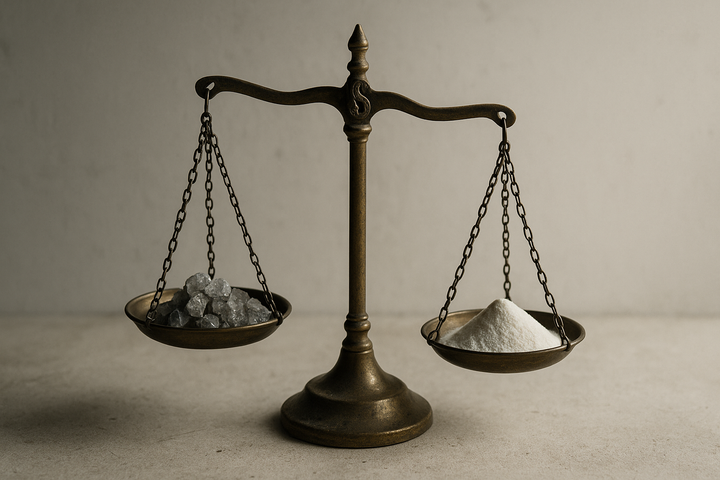
Kort samengevat. Een focusformule combineert cafeïne met L-theanine en B-vitamines zoals B6 en B12 in één vaste, geëtiketteerde dosis, in plaats van een kop koffie waarin de hoeveelheid cafeïne wisselt. Cafeïne is de stimulerende stof die de alertheid beïnvloedt. L-theanine is een aminozuur zonder toegestane EU-gezondheidsclaim, en de populaire combinatie van cafeïne en L-theanine is nog voorlopig onderzoek. B6 en B12 dragen bij tot een normaal energieleverend metabolisme en tot vermindering van vermoeidheid en moeheid. Het belangrijkste praktische verschil is een constante, afgemeten vorm. Dit is informatie, geen medisch advies.
Wat is een focusformule en hoe verschilt die van koffie?
Een focusformule is een supplement dat een afgemeten hoeveelheid cafeïne, het aminozuur L-theanine en B-vitamines zoals B6 en B12 in één portie samenbrengt. Koffie levert ook cafeïne, maar de hoeveelheid in een kop verschilt sterk per boon, branding, maling en bereidingswijze, waardoor twee kopjes zelden gelijk zijn. Een formule is opgebouwd rond een vaste, geëtiketteerde dosis, wat het cafeïnegehalte voorspelbaar maakt en gemakkelijker te volgen over de dag. Onze eigen aanpak van deze vorm wordt beschreven bij onze focusformule. Het doel van deze vergelijking is niet om te zeggen dat het één beter is dan het ander, maar om uit te leggen hoe de onderdelen werken en waar de praktische verschillen liggen.
Hoe werkt cafeïne?
Cafeïne is wereldwijd de meest gebruikte stimulerende stof en komt van nature voor in koffie, thee en cacao. In het lichaam werkt het vooral door adenosine te blokkeren, een signaalstof die zich gedurende de dag opbouwt en het gevoel van slaperigheid bevordert. Door de adenosinereceptoren te bezetten, vermindert cafeïne dat signaal en wordt het in verband gebracht met een wakkerder gevoel. Toegestane EU-claims voor cafeïne, namelijk dat het helpt de alertheid te verhogen en helpt de concentratie te verbeteren, bestaan alleen onder strikte voorwaarden: ze gelden wanneer een gekwantificeerde portie ten minste de vereiste hoeveelheid cafeïne levert en de verplichte waarschuwingsetikettering aanwezig is. Omdat die voorwaarden specifiek zijn, gebruikt dit artikel beschrijvende taal en steunt het niet op de claims.
Waarom combineren mensen cafeïne met L-theanine?
L-theanine is een aminozuur dat vooral in theebladeren voorkomt. Het heeft geen toegestane EU-gezondheidsclaim, dus wettelijk mag er niets specifieks worden beloofd over wat het doet, en die belofte doen wij hier ook niet. Mensen combineren cafeïne met L-theanine omdat sommige voorlopige studies de combinatie hebben onderzocht en thee van nature beide bevat. Het is belangrijk om duidelijk te zijn dat dit onderzoek zich in een vroeg stadium bevindt, de bevindingen wisselend zijn, en een populaire combinatie niet hetzelfde is als een bewezen of toegestaan effect. L-theanine staat hier als beschreven ingrediënt, niet als voordeel.
Wat is de rol van de B-vitamines?
B-vitamines zijn in water oplosbare vitamines die betrokken zijn bij de manier waarop het lichaam energie uit voeding gebruikt. Voor vitamine B6 en vitamine B12 heeft de EU gezondheidsclaims toegestaan die eenvoudig mogen worden vermeld: ze dragen bij tot een normaal energieleverend metabolisme, tot een normale werking van het zenuwstelsel, tot een normale psychologische functie en tot vermindering van vermoeidheid en moeheid. Deze toegestane bijdragen gelden voor de vitamines zelf. Ze beschrijven een ondersteunende rol in een normaal metabolisme en zijn geen claim dat de formule de prestaties verhoogt voorbij wat die voedingsstoffen doen.
Koffie versus een focusformule: een praktische vergelijking
Het onderstaande overzicht is ter informatie. Het vergelijkt vorm en gemak, niet effect.
| Aspect | Gewone koffie | Focusformule |
|---|---|---|
| Hoeveelheid cafeïne | Wisselt per boon, branding en bereiding | Vast, vermeld op het etiket |
| Toegevoegde ingrediënten | Cafeïne en natuurlijke stoffen uit koffie | Cafeïne plus L-theanine en B-vitamines |
| Vorm | Een gezette drank, telkens bereid | Een afgemeten portie, klaar voor gebruik |
| Voorspelbaarheid | Moeilijker om de totale inname te volgen | Gemakkelijker om de totale inname te volgen |
| Smaak en ritueel | Voor veel mensen deel van de aantrekkingskracht | Neutraal, geen bereiding nodig |
Geen van beide is de juiste keuze voor iedereen. Koffie biedt smaak en ritueel; een formule biedt een constante, geëtiketteerde dosis. Wat voor beide het meest telt, is de totale hoeveelheid cafeïne die je over de dag binnenkrijgt.
Hoe gebruik je cafeïne verantwoord?
- Ken je gevoeligheid. Mensen verschillen sterk in hoe ze op cafeïne reageren; sommigen voelen zich onrustig, gejaagd of angstig bij hoeveelheden die anderen gemakkelijk verdragen.
- Houd het dagtotaal in de gaten. Cafeïne telt op uit alle bronnen, waaronder koffie, thee, cola, energiedranken en supplementen, dus tel ze samen in plaats van apart.
- Vermijd cafeïne laat op de dag. Cafeïne kan de slaap urenlang verstoren, dus veel mensen beperken het in de namiddag en avond.
- Stapel geen stimulerende middelen. Een formule bovenop meerdere koffies of energiedranken nemen verhoogt het totaal snel en kun je beter vermijden.
- Blijf binnen het etiket. Volg de aanbevolen portie en overschrijd die niet, en raadpleeg een arts of apotheker als je medicijnen gebruikt of een aandoening hebt.
Wie kan het beter vermijden?
Cafeïne is niet voor iedereen geschikt. Mensen die zwanger zijn of borstvoeding geven, wordt over het algemeen aangeraden cafeïne te beperken en medisch advies te volgen, omdat de aanbevolen limieten in deze situaties lager liggen. Mensen die gevoelig zijn voor cafeïne, die hartkloppingen, angst of een verstoorde slaap ervaren, of die hart-, bloeddruk-, schildklier- of andere aandoeningen hebben die door stimulerende middelen worden beïnvloed, moeten voorzichtig zijn en advies vragen. Cafeïnehoudende producten zijn over het algemeen niet bedoeld voor kinderen of jongeren. Als je medicijnen gebruikt of niet zeker weet of cafeïne voor jou geschikt is, raadpleeg dan eerst een arts of apotheker. Supplementen zijn geen vervanging voor een gevarieerde voeding, voldoende slaap of medische zorg.
Veelgestelde vragen
Is een focusformule sterker dan koffie?
Niet per se. Wat telt is de hoeveelheid cafeïne, die bij een formule vast en vermeld is maar bij koffie wisselt. Een formule is niet automatisch sterker; het is alleen voorspelbaarder, en de L-theanine en B-vitamines maken de cafeïne zelf niet krachtiger.
Geeft L-theanine kalme focus?
Dat kunnen we niet claimen. L-theanine heeft geen toegestane EU-gezondheidsclaim, en het onderzoek naar de combinatie van cafeïne en L-theanine is voorlopig en wisselend. Het staat erin als beschreven ingrediënt, niet als beloofd effect, en je mag er niets specifieks van verwachten.
Wat doen de B-vitamines hier?
Vitamine B6 en B12 dragen bij tot een normaal energieleverend metabolisme, tot een normale werking van het zenuwstelsel en tot vermindering van vermoeidheid en moeheid. Dit zijn toegestane bijdragen van de vitamines zelf en beschrijven een normale ondersteunende rol, geen extra impuls.
Kan ik het elke dag nemen?
Volg de dosering op het etiket en houd je totale cafeïne uit alle bronnen in gedachten. Veel mensen letten op hoeveel cafeïne ze dagelijks binnenkrijgen en vermijden het laat op de dag. Gebruik je medicijnen of heb je een aandoening, vraag dan een arts of apotheker.
Wie kan het beter niet gebruiken?
Mensen die zwanger zijn of borstvoeding geven, die gevoelig zijn voor cafeïne, die bepaalde hart-, bloeddruk- of andere aandoeningen hebben, en kinderen of jongeren kunnen het beter vermijden of eerst advies vragen. Raadpleeg bij twijfel een zorgverlener over jouw situatie.
Bronnen
- EFSA-panel voor dieetproducten, voeding en allergieën. Wetenschappelijk advies over de veiligheid van cafeïne. EFSA Journal. 2015;13(5):4102.
- EFSA-panel voor dieetproducten, voeding en allergieën. Wetenschappelijk advies over de onderbouwing van gezondheidsclaims voor vitamine B6. EFSA Journal. 2010;8(10):1759.
- EFSA-panel voor dieetproducten, voeding en allergieën. Wetenschappelijk advies over de onderbouwing van gezondheidsclaims voor vitamine B12. EFSA Journal. 2010;8(10):1756.
- EU-register van voedings- en gezondheidsclaims voor levensmiddelen. Verordening (EU) nr. 432/2012.
- Verordening (EG) nr. 1924/2006 inzake voedings- en gezondheidsclaims voor levensmiddelen.
Geschreven door het redactieteam van NOTFORTOMORROW. Hoe we onderzoeken: we baseren feitelijke uitspraken op het officiële EU-claimregister en op institutionele wetenschappelijke bronnen, we citeren onze bronnen en we dateren onze reviews. Dit artikel is informatie, geen medisch advies; overleg met een gekwalificeerde professional over jouw situatie. Laatst beoordeeld: 2026-06-06.