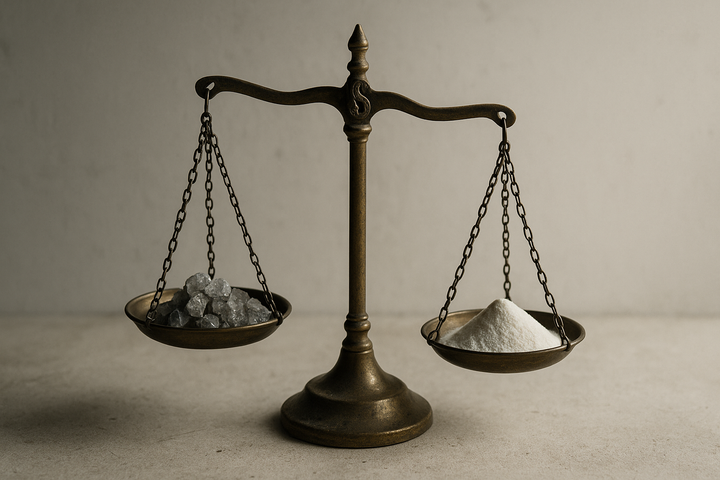
Hydrogen water is ordinary drinking water with extra molecular hydrogen gas (H2) dissolved into it. That is the whole idea: the water is chemically the same, it just carries dissolved hydrogen, the smallest molecule there is. Our molecular hydrogen tablets make it through an effervescent magnesium reaction that releases H2 into the glass. As for what the research actually says: molecular hydrogen is a genuine and active area of study, with promising antioxidant and anti-inflammatory signals in laboratory and small human trials, but the human evidence is still early, comes from small short studies, and recent systematic reviews are openly cautious. Importantly, there is no authorised EU health claim for hydrogen water, so we make none. The only part of our tablet that carries an authorised health claim is its magnesium. This article explains the chemistry, the honest state of the science, and exactly what we can and cannot say.
What is hydrogen water, exactly?
Molecular hydrogen (H2) is a colourless, odourless gas made of two hydrogen atoms. Hydrogen water is simply water with some of this gas dissolved in it, in the same way sparkling water carries dissolved carbon dioxide. It does not change the taste much and it is not a different kind of water. The amount that can stay dissolved is small: at normal atmospheric pressure, water saturates at roughly 1.6 mg of hydrogen per litre, which is about 1.6 ppm, also written as 1600 ppb (parts per billion). That saturation ceiling is a physical limit, and it is why hydrogen water is measured in these very small units.
For a long time H2 was assumed to be biologically inert. That changed after a wave of research from around 2007 onward began treating it as a possible signalling and antioxidant molecule, a shift described in detail in the review by Ohta (Source 1). That review is a useful anchor because it is honest that this is a developing research field, not settled medicine.
How an effervescent tablet makes hydrogen water
The practical question is how you get hydrogen into a glass at home. Our tablets use magnesium. When metallic magnesium meets water it reacts and releases hydrogen gas, following the simple chemistry Mg + 2H2O produces Mg(OH)2 + H2. The same principle was used in early research, for example the pilot study by Nakao and colleagues, which generated hydrogen-rich water by placing metallic magnesium in water and measured the dissolved hydrogen it produced (Source 2). An effervescent tablet packages that reaction into a fast, convenient fizz: drop it in, it dissolves, and the released hydrogen dissolves into the water along with the tablet's electrolyte minerals.
The concentration you can reach is bounded by that saturation limit. A tablet can briefly push the water to a high, even super-saturated level, which then settles back toward the roughly 1.6 ppm ceiling as excess gas escapes. Our tablets are formulated to deliver up to around 1600 ppb (1.6 ppm) of dissolved H2 per glass, at the practical top end of what atmospheric-pressure water holds.
Why you drink it straight away
Because hydrogen is the smallest and lightest molecule, it does not stay put. Once dissolved, it steadily escapes back into the air, so the concentration in an open glass falls over time. That is the reason the instruction is to dissolve one tablet in 200 to 500 ml of water and drink it immediately, rather than making a bottle to sip through the afternoon. If you leave it standing, you are mostly drinking plain water with the minerals still in it.

What does the research actually say?
This is where honesty matters more than enthusiasm, because hydrogen water is marketed with claims that run well ahead of the evidence.
The proposed mechanism
The main scientific hypothesis is that molecular hydrogen can act as a mild, selective antioxidant and may influence inflammation and cell signalling, a mechanism laid out in Ohta's review (Source 1) and echoed in the sports-medicine perspective by Ostojic (Source 3). The appeal is that H2 is tiny enough to diffuse easily and appears well tolerated. A plausible mechanism, however, is not the same as a proven clinical benefit in healthy people.
What human trials show so far
There are real human studies, but they are mostly small and short. Early work such as Nakao's open-label pilot reported changes in antioxidant markers in people with features of metabolic syndrome (Source 2). A 2023 systematic review and meta-analysis by Todorovic and colleagues looked specifically at blood lipid profiles across randomised trials and found some signals, while noting the small number and modest size of the studies (Source 4). In the exercise field, a 2024 systematic review and meta-analysis asked whether molecular hydrogen can enhance physical performance in healthy adults and reported that the current evidence does not support a clear performance benefit, again limited by small, heterogeneous trials (Source 5).
The honest verdict
A 2024 systematic review in the International Journal of Molecular Sciences framed the question bluntly in its title, asking whether hydrogen water is extra healthy or a hoax, and concluded that while some randomised trials show measurable effects, the overall body of evidence remains preliminary and far from establishing hydrogen water as a proven health intervention (Source 6). That is the fair summary: an interesting, well-tolerated molecule with early positive signals, not a settled benefit. Anyone selling it as a cure or a guaranteed performance boost is ahead of the science.
What we can and cannot say
This is also a regulatory point, and it is why our language is careful. Molecular hydrogen has no authorised health claim under EU law, so we do not attach any health benefit to the hydrogen itself. We describe it factually: what it is, how the tablet produces it, and how it is measured. Nothing more.
What our tablet can legitimately be described with are the authorised claims for its magnesium content, because each tablet provides a meaningful amount of that mineral. Under Regulation (EU) No 432/2012, magnesium contributes to a normal electrolyte balance, to the reduction of tiredness and fatigue, to normal energy-yielding metabolism, to the normal functioning of the nervous system and to normal muscle function (Source 7). The tablet's potassium and sodium are present in small amounts that sit below the threshold required to bear a claim, so we make none for them and list them simply as electrolytes.

What is in the NOTFORTOMORROW hydrogen tablet
Here are the verified per-tablet amounts, taken directly from the product specification. NRV is the EU Nutrient Reference Value.
| Component | Per tablet | NRV |
|---|---|---|
| Magnesium | 80 mg | 21% |
| Potassium | 16 mg | 0.8% |
| Sodium | 41 mg | no EU NRV |
| Molecular hydrogen (H2) | released on dissolving | not applicable |
The hydrogen is not a fixed weight on a label because it is a gas generated when the tablet dissolves, then measured as a concentration in the water (up to around 1600 ppb per glass) rather than as milligrams swallowed. The magnesium, potassium and sodium are the electrolyte minerals that stay in the water. If you want the fuller picture on magnesium itself, our guides on what magnesium does and the dedicated 7-in-1 magnesium complex go deeper, and for the wider debate on the hydrogen itself see our companion piece on the hydrogen water hype.
How to use it, honestly
Dissolve one tablet in 200 to 500 ml of water and drink it immediately, up to a maximum of two tablets per day. It is a food supplement and an easy-drinking way to add magnesium and a measured dose of dissolved hydrogen to a glass of water, not a substitute for a varied, balanced diet or a treatment for any condition. If you are drawn to it for the hydrogen specifically, go in with realistic expectations set by the evidence above. If you are drawn to it for the magnesium and the electrolytes, that part rests on established, authorised nutrition science.
Frequently Asked Questions
What is hydrogen water?
It is ordinary drinking water with extra molecular hydrogen gas (H2) dissolved into it, much as sparkling water carries dissolved carbon dioxide. The water itself is unchanged; it simply holds a small amount of dissolved hydrogen, measured in parts per billion or milligrams per litre.
Does hydrogen water actually work?
The honest answer is that the science is still early. Molecular hydrogen shows promising antioxidant and anti-inflammatory signals in laboratory work and small human trials, but recent systematic reviews describe the human evidence as preliminary and not yet conclusive, and a 2024 exercise review found no clear performance benefit in healthy adults (Sources 5, 6). It is an interesting molecule under active study, not a proven remedy.
How does a tablet make hydrogen water?
The tablet contains magnesium, which reacts with water to release hydrogen gas (Mg + 2H2O produces Mg(OH)2 + H2). The effervescent reaction dissolves the hydrogen into the glass along with the electrolyte minerals. This is the same magnesium-and-water principle used in early hydrogen-water research (Source 2).
Why do you have to drink it right away?
Hydrogen is the smallest, lightest molecule, so once dissolved it steadily escapes back into the air and the concentration in an open glass falls. Drinking it immediately means you actually get the dissolved hydrogen rather than plain water. Leaving it to stand lets most of the hydrogen out.
Are there any health claims for the hydrogen?
No. There is no authorised EU health claim for molecular hydrogen, so we describe it only factually. The authorised claims associated with our tablet come from its magnesium, which contributes to a normal electrolyte balance and to the reduction of tiredness and fatigue, among other functions (Source 7).
Is hydrogen water safe?
Molecular hydrogen has generally been well tolerated in studies to date. Our tablet is a food supplement: follow the label, dissolve one tablet in 200 to 500 ml of water, and do not exceed two tablets per day. As with any supplement, it is not a substitute for a balanced diet, and specific medical concerns should be discussed with a healthcare professional.
The Bottom Line
Hydrogen water is a real, measurable thing: ordinary water carrying a small amount of dissolved molecular hydrogen, produced in our tablets by a magnesium reaction and best drunk straight away before the gas escapes. What the research actually says is more modest than the marketing around it: H2 is an intriguing, well-tolerated molecule with early antioxidant signals, but the human evidence is still small and preliminary, and recent reviews stop well short of calling it a proven health benefit. We reflect that honestly by making no health claim for the hydrogen and by grounding the tablet's real, authorised nutrition value in its magnesium, which contributes to a normal electrolyte balance and to the reduction of tiredness and fatigue.
Sources
- Ohta S. Molecular hydrogen as a preventive and therapeutic medical gas: initiation, development and potential of hydrogen medicine. Pharmacology and Therapeutics. 2014;144(1):1-11.
- Nakao A, Toyoda Y, Sharma P, et al. Effectiveness of hydrogen rich water on antioxidant status of subjects with potential metabolic syndrome: an open label pilot study. Journal of Clinical Biochemistry and Nutrition. 2010;46(2):140-149.
- Ostojic SM. Molecular hydrogen in sports medicine: new therapeutic perspectives. International Journal of Sports Medicine. 2015;36(4):273-279.
- Todorovic N, Fernandez-Landa J, Santibanez A, et al. The Effects of Hydrogen-Rich Water on Blood Lipid Profiles in Clinical Populations: A Systematic Review and Meta-Analysis. Pharmaceuticals. 2023;16(2):142.
- Can molecular hydrogen supplementation enhance physical performance in healthy adults? A systematic review and meta-analysis. Frontiers in Nutrition. 2024;11:1387657.
- Hydrogen Water: Extra Healthy or a Hoax? A Systematic Review. International Journal of Molecular Sciences. 2024;25(2):973.
- Commission Regulation (EU) No 432/2012 establishing a list of permitted health claims made on foods. EUR-Lex. 2012.