The short answer: heat and light matter, but humidity is the one that quietly does the real damage, and it does it fastest to vitamins in powders and blends. Minerals such as zinc and magnesium cannot chemically "go off" the way a vitamin can. B vitamins, vitamin C and vitamin D are the fragile ones. The worst place in most homes is the bathroom cabinet, because a shower turns it into a humidity chamber several times a day. And the best before date on the pack is not a safety cliff: in EU law it is a quality promise that only holds when the product is properly stored, which is the part almost nobody reads.
This article explains what actually happens inside a supplement pack, which of our own products are genuinely sensitive to what, and the small number of habits that make a real difference. Numbers here come from published stability research and from EU food law, both listed in full at the end.

Can bad storage actually ruin a supplement?
Two beliefs are common and both are wrong. The first is that supplements are inert little stones that keep forever. The second is that a supplement stored badly turns dangerous. Neither describes what happens.
What actually happens is loss of content. A vitamin is a molecule, and molecules react: with water, with oxygen, with light, and faster when it is warm. When they react, they stop being the vitamin. Nothing toxic appears in a jar of vitamin C left in a warm damp kitchen; there is simply less vitamin C in it than the label says. That is a quality failure, not a poisoning risk, and it is why the industry measures storage in terms of "content remaining", not "safe or unsafe".
The interesting question is therefore not "is it ruined", but "how much is left, and which ingredients lost the most". That depends far more on your kitchen than on your brand.
What damages supplements faster, humidity or heat?
Most people worry about heat first. In solid supplements, water is usually the bigger problem, because chemical reactions need a medium to happen in, and absorbed moisture provides it.

What is deliquescence, and why does it ruin powders?
Many crystalline ingredients have a critical relative humidity, called the deliquescence point, above which the crystal starts pulling enough water out of the air to dissolve itself. Below that point the powder stays dry and stable. Above it, you effectively have a concentrated solution sitting inside your jar, and degradation accelerates sharply.
A study in the Journal of Agricultural and Food Chemistry stored thiamine (B1), pyridoxine (B6) and sodium ascorbate (vitamin C), alone and in blends, at humidity levels from 43% to 98% at 22 degrees Celsius for up to 12 weeks [1]. Thiamine and ascorbate degradation were significantly promoted above the deliquescence point. Pyridoxine was the least sensitive of the three. The researchers also found that vitamin C did not just degrade itself: the presence of ascorbate accelerated the loss of thiamine. Note the temperature: 22 degrees is a normal room. The variable that broke these vitamins was moisture, not warmth.
Why are blends more fragile than single ingredients?
There is a second effect that matters for anything sold as a complex or a blend. When crystalline ingredients are mixed, the blend deliquesces at a lower humidity than any of its individual components, a phenomenon called deliquescence lowering [1][2]. In practice: a multi ingredient powder starts absorbing water in conditions where each separate ingredient would still be perfectly dry.
This is the single most useful thing to know about supplement storage, and it is why "keep it dry" is not a throwaway phrase on a label. It is the condition on which everything else rests.
Which room is the worst place to store supplements?
| Place | Why | Verdict |
|---|---|---|
| Bathroom cabinet | Deliberately filled with hot water vapour every day, and mounted where warm air collects | Worst realistic option |
| Kitchen counter near the hob, kettle or dishwasher | Combines heat and steam in the same spot | Avoid |
| Parked car | Interiors have been measured above 70 degrees Celsius | Never |
| Windowsill in direct sun | Sunlight through a window is what damages light sensitive ingredients | Avoid |
| Fridge, for dry capsules, tablets and powders | Moisture condenses on the cold contents every time the jar comes out | A downgrade, not an upgrade |
| Bedroom drawer or hallway cupboard | Cool, dark and stable, with no steam source nearby | Best everyday choice |
The bathroom cabinet is the traditional home for pills and it is the worst realistic option: it is the one room in the house that is deliberately filled with hot water vapour every day, and the cabinet is usually mounted on the wall where warm air collects.
Field data supports the general point. A study that mapped temperature and humidity in 35 rooms across households, alongside a survey of more than 1,000 households, found that 25 degrees Celsius was exceeded across a full 24 hour period in bathrooms, kitchens and rarely used rooms, and that parked car interiors exceeded 70 degrees [3]. More than a third of participants could not identify the correct storage conditions for the medicines they kept. Two honest caveats: that study was carried out in Saudi Arabia, so the absolute temperatures are higher than a Northern European home would see, and it looked at medicines rather than supplements. The pattern it shows, that bathrooms and kitchens are the warm humid rooms and a parked car is an oven, travels perfectly well.
A closed drawer, a cupboard in a hallway or a bedroom shelf away from the window will beat a bathroom cabinet almost every time. It is a free upgrade.
How much heat can a supplement actually take?
Stability testing has a formal reference standard. The international pharmaceutical guideline ICH Q1A(R2) sets the long term storage condition at 25 degrees Celsius (plus or minus 2) and 60% relative humidity (plus or minus 5), with accelerated testing at 40 degrees and 75% relative humidity [4]. That is where "room temperature, dry" comes from: it is not vague advice, it is roughly the condition the shelf life was demonstrated under.
What does exceeding it cost? A 2022 study in Heliyon stored powdered nutritional formulas under three regimes: 25 degrees at 60% humidity for up to 24 months, 37 degrees at 75% humidity for up to 6 months, and 60 degrees for up to 10 days [5]. Vitamins A, E and thiamine fell as either temperature or time went up, following first order kinetics, while vitamin C in those particular formulas stayed stable. The vitamins were most stable at 25 degrees and 60% humidity, and, importantly for perspective, even the stressed samples stayed above the legal minimum levels.
So: heat is a real dial, it is gradual, and a few warm summer weeks in a cupboard will not empty your jar. A car dashboard is a different conversation.
Which supplements are damaged by light?
Light sensitivity is ingredient specific rather than general. Two families in our range are genuinely photolabile.
B12. All forms of vitamin B12 are light sensitive. Under UVA exposure in solution, the biologically active forms methylcobalamin and adenosylcobalamin are converted to hydroxocobalamin within seconds; hydroxocobalamin is the most stable of them [6]. Read that carefully: it describes a solution under a UVA lamp, not a capsule inside an opaque jar inside a cupboard. The lesson is not "B12 is doomed", it is "B12 has no business sitting on a sunny windowsill".
Riboflavin (B2), which also drags vitamin C down with it. Riboflavin is not only degraded by light, it acts as a photosensitiser: under light it actively accelerates the oxidation of vitamin C alongside it, and the more riboflavin present, the faster the vitamin C goes [7]. If you take a B-complex and a vitamin C containing product, they are both better off in the dark.
The practical version is simple. Opaque or dark packaging plus a closed cupboard removes essentially all of this risk. Sunlight through a window is the thing to avoid, not room lighting.
Do minerals such as zinc and magnesium expire?
This is where honest chemistry helps. Zinc and magnesium are elements. The zinc atom in a zinc picolinate capsule cannot decompose on your shelf; there is no reaction available to it that makes it stop being zinc. The same is true of the elemental magnesium in a magnesium complex.
What can change in a mineral product is everything around the mineral: the organic carrier the mineral is bound to, any vitamin included alongside it (our magnesium product also contains vitamin C, which is the sensitive component), the capsule shell, and the physical state of the powder. Moisture makes powders cake and clump. A clumped powder has usually absorbed water, which tells you the storage was wrong and that any vitamins in the same blend have had a bad time, but the mineral content itself is still there.
So a mineral product past its best before date is very rarely "empty". A B-complex or a vitamin C rich blend stored in a damp kitchen for two years is a different matter.
Why are oils and liquids the most fragile supplements?
Anything dissolved or suspended in a liquid is more reactive than the same thing locked in a dry crystal, simply because the molecules can move and meet.
Vitamin D3 illustrates this well. A systematic stability study in Pharmaceutics tested D3 in aqueous media against temperature, light, oxygen, pH, concentration and metal ions [8]. Metal ions and acidic conditions were the main destabilising factors, light and oxygen degraded it in a pattern that did not even fit simple first order kinetics, and the laboratory results matched what the authors measured in commercial liquid products. To be precise about scope: that work was in water based systems, and our D3 and K2 drops are formulated in MCT oil, which is a more protective environment. The direction of travel is the same though. Cap it properly, keep it out of the light, do not store it above the stove, and use it within a sensible time after opening. The pack says: store cool and dry.

How should you store powders and effervescent tablets?
Never put a wet scoop back in the tub. Dry creatine monohydrate powder is a stable material. Creatine in water is not. In a pharmaceutical study of creatine solutions prepared from effervescent formulations, about 90% of the creatine was lost within 45 days at 25 degrees, and about 80% within the same period even under refrigeration at 4 degrees, with the pH drifting upward over storage [9]. That study used a di-creatine citrate effervescent product rather than a plain monohydrate powder, so it is not a direct model of a scoop of creatine monohydrate in your shaker. But it makes the principle very concrete: water starts the clock. Mix it, drink it, and keep moisture away from the tub.
Effervescent tablets are moisture activated by design. Our molecular hydrogen tablets only work because they react when they meet water. That is exactly why humid air is their enemy: any moisture that reaches a tablet in storage starts the same reaction early and quietly, and the tablet you eventually drop in a glass has already spent part of itself. Keep the pack closed, and do not decant tablets into a pill organiser days in advance.
What does the best before date on a supplement legally mean?
EU law is more precise here than most people assume, and the precision is useful.
Regulation (EU) No 1169/2011 defines the "date of minimum durability" as the date until which the food retains its specific properties when properly stored [10]. The whole guarantee is conditional on storage. The same regulation makes both the date and any special storage conditions mandatory information on the label [10]. And it draws a clear line elsewhere: a "use by" date replaces the durability date only for foods that are microbiologically highly perishable, and after a use by date the food is deemed unsafe [10]. Supplements carry a best before date, not a use by date.
What follows is honest rather than convenient. A supplement one month past its best before date is not dangerous, it is simply no longer guaranteed to deliver the amount on the label. How much it has actually lost depends on the ingredient and, again, on how you stored it. We do not sell past the date, and we would not tell you to build your intake around a jar that expired two years ago. But nor should you throw away a nearly full jar of magnesium because it went two weeks past a date printed on the bottom.
One more label rule worth knowing: Directive 2002/46/EC requires every food supplement to carry a statement that the product should be stored out of the reach of young children [11]. That one is about safety, and it is not optional. If you want the wider story of which words on a supplement label are legally defined and which are marketing, we wrote a separate piece on what supplement label words actually mean in EU law.
How should you store supplements at home, in practice?
These are the storage lines currently printed on our products, pulled from the packs themselves rather than invented for this article:
| Product | Storage instruction printed on the pack |
|---|---|
| Zinc Picolinate Capsules 30 mg | store sealed in a cool, dry place, protected from light |
| Bioactive Vitamin B-Complex | store cool, dry and away from light |
| Creatine Monohydrate powder | store cool and dry, away from direct sunlight |
| Vitamin D3 + K2 Drops | store cool and dry |
| Molecular Hydrogen Tablets | store at room temperature, protected from sunlight and heat |
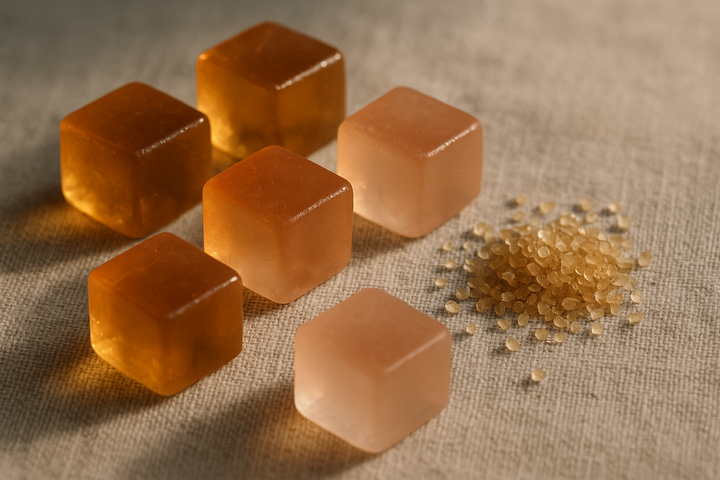
| Shilajit resin | store in a cool, dry place away from light |
| FocusFuel lozenges | store cool and dry, away from direct sunlight |
Six habits cover almost all of it:
- Move everything out of the bathroom. A bedroom drawer or hallway cupboard is better than any medicine cabinet above a sink.
- Close the lid properly and immediately. Most moisture enters while the jar is open on a kitchen counter, not through the plastic.
- Leave the desiccant sachet in. It is there to hold the humidity below the point where the blend starts absorbing water. It is not packaging waste.
- Keep it out of direct sunlight. Not out of daylight; out of the beam.
- Do not store near the hob, the kettle, the dishwasher or a radiator. Those spots combine both stressors at once.
- Never return wet scoops, wet spoons or wet fingers to a tub.
Note what is not on that list: refrigeration. For a dry supplement a fridge is usually a downgrade, because every time you take the jar out, moisture condenses on the cold contents. Cool and dry beats cold.
Frequently Asked Questions
Should I keep my supplements in the fridge?
For dry capsules, tablets and powders, no. A fridge is a humid environment, and taking a cold jar into a warm room causes condensation on the contents, which is precisely the thing you are trying to avoid. A cool, dry cupboard is better. Refrigerate only where a specific product tells you to.
Does a supplement stop working the day after the best before date?
No. Under EU law that date is the point until which the product retains its specific properties when properly stored [10], not a safety threshold. Decline is gradual and ingredient specific: minerals barely change, sensitive vitamins lose more. It is a quality question, and how you stored it matters more than the number of days elapsed.
My powder has clumped into a hard lump. Is it ruined?
Clumping means it absorbed moisture, so the storage conditions were wrong. For a pure mineral or a single ingredient powder, the active content is still there and it is a texture problem. For a vitamin containing blend, treat clumping as a signal that the fragile ingredients have been under stress, since above the deliquescence point degradation accelerates [1]. If it also smells or looks different, discard it.
Do I need to keep the silica gel sachet and the cotton wool?
Keep the desiccant sachet: it exists to hold humidity below the level at which the powder or blend starts pulling in water. The cotton wool is only there to stop tablets rattling and breaking in transit, and once the pack is open it can hold moisture against the contents, so you can throw that away.
Is sunlight through a window really a problem?
For light sensitive ingredients, yes. B12 forms are converted rapidly under UVA in solution [6], and riboflavin under light accelerates the destruction of vitamin C next to it [7]. Ordinary room lighting through an opaque jar in a closed cupboard is not a meaningful risk. A jar sitting in a windowsill beam is.
Can I keep supplements in my gym bag or car?
Occasionally, briefly, yes. Permanently, no. Parked car interiors have been measured above 70 degrees Celsius [3], which is far beyond even accelerated stability testing conditions of 40 degrees [4]. A gym bag adds sweat and humidity to the same problem.
The Bottom Line
Storage will not turn a supplement into something harmful, but it decides how much of what you paid for is still in the jar when you take it. Humidity is the main lever, and it works at ordinary room temperature: above a blend's deliquescence point, thiamine and vitamin C degrade markedly [1], and mixtures cross that point at lower humidity than single ingredients do [1][2]. Heat is a slower, more forgiving dial, calibrated by the industry around 25 degrees and 60% humidity [4]. Light matters intensely for a short list of ingredients, chiefly B12 and riboflavin [6][7]. Minerals barely care at all.
Which means the fix is almost embarrassingly cheap. Take your supplements out of the bathroom, close the lids, keep the desiccant, stay out of the sunbeam, and never put anything wet back in a tub. That is most of the science, applied.
Sources
- Hiatt AN, Ferruzzi MG, Taylor LS et al. Impact of deliquescence on the chemical stability of vitamins B1, B6, and C in powder blends. Journal of Agricultural and Food Chemistry, 2008.
- Allan M, Mauer LJ. Comparison of methods for determining the deliquescence points of single crystalline ingredients and blends. Food Chemistry, 2016.
- Alqurshi A. Household storage of pharmaceutical products: a call for utilising smart packaging solutions. Saudi Pharmaceutical Journal, 2020.
- International Council for Harmonisation. ICH Q1A(R2): Stability testing of new drug substances and drug products. Long term condition 25 degrees Celsius / 60% relative humidity; accelerated condition 40 degrees Celsius / 75% relative humidity.
- Yang H, Xu L, Hou L et al. Stability of vitamin A, E, C and thiamine during storage of different powdered enteral formulas. Heliyon, 2022.
- Juzeniene A, Nizauskaite Z. Photodegradation of cobalamins in aqueous solutions and in human blood. Journal of Photochemistry and Photobiology B, 2013.
- Noreen A, Anwar Z, Ahsan Ejaz M et al. Riboflavin (vitamin B2) sensitized photooxidation of ascorbic acid (vitamin C): a kinetic study. Spectrochimica Acta Part A, 2024.
- Temova Rakusa Z, Pislar M, Kristl A et al. Comprehensive stability study of vitamin D3 in aqueous solutions and liquid commercial products. Pharmaceutics, 2021.
- Ganguly S, Jayappa S, Dash AK. Evaluation of the stability of creatine in solution prepared from effervescent creatine formulations. AAPS PharmSciTech, 2003.
- Regulation (EU) No 1169/2011 on the provision of food information to consumers: Article 2(2)(r) definition of the date of minimum durability, Article 9(1)(f) and (g) mandatory date and storage conditions, and Article 24 on use by dates. (The consolidated text is also published on EUR-Lex, which blocks automated access.)
- Directive 2002/46/EC on food supplements: Article 6(3)(e), mandatory statement that the product should be stored out of the reach of young children.
This article is general information about product storage, not medical advice, and it makes no health claims. Nutrient claims used elsewhere on this site follow Regulation (EU) No 432/2012.