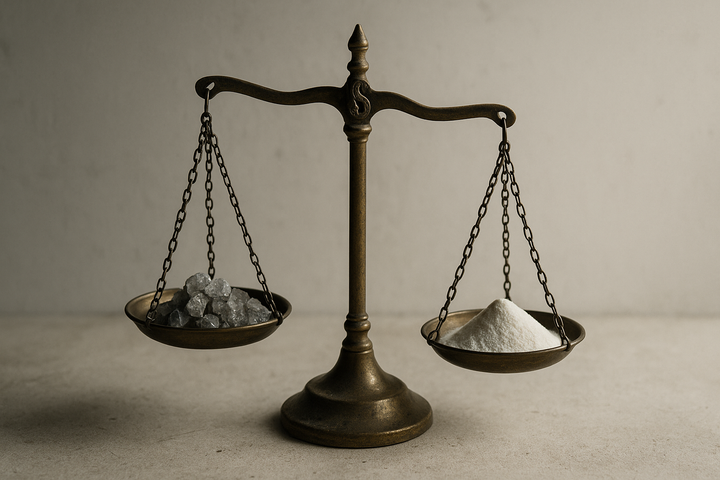
You've seen the claims: shilajit boosts testosterone naturally, increases virility, and restores male vitality. The reality is more nuanced and less marketing-friendly: shilajit does not directly increase testosterone, but it can support the conditions where testosterone production works properly. The science is real, but it has often been misrepresented. Shilajit contains fulvic acid and dozens of minerals, including magnesium and zinc, which are cofactors in testosterone synthesis. It also appears to support mitochondrial function, the energy foundation for hormone production. Where shilajit does not help is in providing a hormonal stimulus itself. Where it can help is in supporting the metabolic conditions for testosterone production. This is why the research shows modest improvements in testosterone mainly in men with suboptimal baseline status, and little change in men whose hormone levels are already optimal.
Where shilajit actually works in the testosterone pathway
Testosterone is synthesised primarily in the Leydig cells of the testes, starting from cholesterol. The conversion requires several enzymes and cofactors, including magnesium, plus energy (ATP). A rate-limiting step is the transfer of cholesterol into the mitochondria via StAR protein, which depends on healthy mitochondrial function. When mitochondria run efficiently, this step works well; when they are impaired, testosterone production can stall even with adequate substrate. Shilajit's relevance is here: fulvic acid, its main active compound, is small enough to cross cell membranes and may act as an electron shuttle that supports ATP production. This is metabolic support, not direct hormone stimulation.
What the clinical studies actually show
The most-cited human trial is Biswas et al., Andrologia (2010) (often miscited elsewhere as other journals). Oligospermic men took 100 mg of processed shilajit twice daily for 90 days. Serum testosterone rose 23.5% (P < 0.001) and total sperm count rose 61.4% versus baseline. The participants had suboptimal baseline status, which is why the effect was meaningful. [study]
A separate randomised, double-blind, placebo-controlled trial, Pandit et al., Andrologia (2016), gave healthy men aged 45-55 purified shilajit 250 mg twice daily for 90 days. It significantly increased total testosterone, free testosterone and DHEAS versus placebo, while keeping LH and FSH well maintained. [study]
For physical performance, a placebo-controlled trial in the Journal of the International Society of Sports Nutrition (Keller et al., 2019) gave 63 recreationally active men 250 or 500 mg of purified shilajit for eight weeks. The 500 mg/day dose reduced the fatigue-induced decline in maximal voluntary strength and lowered serum hydroxyproline, a marker of connective-tissue breakdown - a recovery benefit rather than a large testosterone surge. [study]
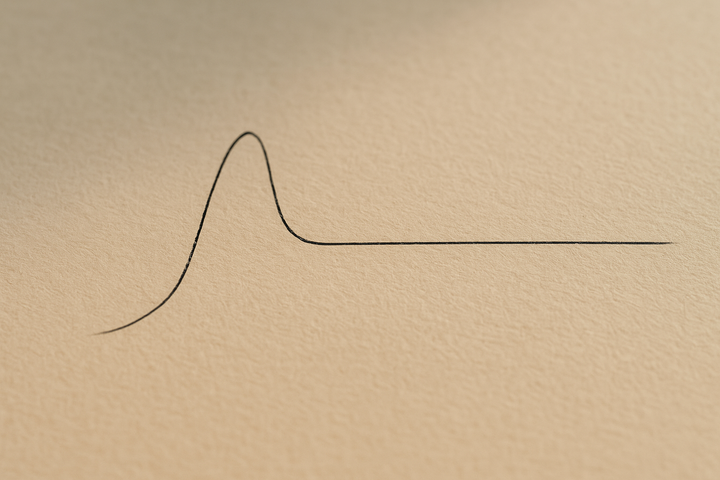
The pattern across studies: shilajit improves testosterone modestly in men with suboptimal baseline status, and has minimal effect in men with already-normal levels. No study shows shilajit producing supraphysiological testosterone or matching testosterone-replacement therapy.
The mineral component: zinc and magnesium
Zinc is an essential cofactor for testosterone synthesis. Foundational research by Prasad and colleagues showed that dietary zinc restriction lowers serum testosterone in healthy men, while zinc supplementation raises it in marginally zinc-deficient men. [study]
Magnesium matters too. A study in Biological Trace Element Research (Cinar et al., 2011) found that magnesium supplementation increased free and total testosterone in both sedentary men and athletes, with the largest effect after exercise. [study]
The practical implication: if your goal is testosterone optimisation, targeted zinc picolinate (around 25-30 mg/day) and magnesium (around 400 mg/day) are well-evidenced and specific. Shilajit's value is complementary - it adds fulvic acid and a broad mineral profile on top of those, rather than replacing them.
Who benefits from shilajit
Men with low testosterone plus metabolic dysfunction: if testosterone is genuinely low and recovery and energy are poor, shilajit is reasonable to try alongside zinc and magnesium. For training recovery: the strength data above supports a modest recovery benefit. For general mineral and metabolic support: shilajit resin offers a convenient, broad-spectrum option. Not for men with already-normal testosterone: if you are in the 500-800 ng/dL range, do not expect a hormonal change.
The honest summary
Shilajit does not directly raise testosterone. It supports the metabolic conditions - mitochondrial function and mineral status - under which testosterone production works efficiently. If those are your bottleneck, it can help; if they are already optimal, it will not. Use a quality shilajit resin, give it 8-12 weeks, and pair it with zinc, magnesium, sleep and strength training for the best foundation.
References
- Biswas TK, et al. Clinical evaluation of spermatogenic activity of processed Shilajit in oligospermia. Andrologia. 2010;42(1):48-56. PubMed
- Pandit S, et al. Clinical evaluation of purified Shilajit on testosterone levels in healthy volunteers. Andrologia. 2016;48(5):570-575. PubMed
- Keller JL, et al. The effects of Shilajit supplementation on fatigue-induced decreases in muscular strength and serum hydroxyproline levels. J Int Soc Sports Nutr. 2019;16(1):3. PubMed
- Cinar V, et al. Effects of magnesium supplementation on testosterone levels of athletes and sedentary subjects at rest and after exhaustion. Biol Trace Elem Res. 2011;140(1):18-23. PubMed
- Prasad AS, et al. Zinc status and serum testosterone levels of healthy adults. Nutrition. 1996;12(5):344-348. PubMed
Educational content, not medical advice. Food supplements are not a substitute for a varied diet or medical treatment.