MAGBOTL and Structured Hydration: What Actually Matters?
Structured hydration is a useful routine, not a special form of water. Learn what determines fluid needs, when electrolytes matter, and what the 950 ml insulated MAGBOTL does and does not do.

Research notes, ingredient deep-dives and honest answers from the NOTFORTOMORROW editorial team.
80 articles

An extract ratio such as 10:1 means that about 10 g of dried plant went into each gram of extract. Why a higher ratio is not a stronger product, what "equivalent to 5,000 mg" really says, how a carrier changes the number, and what EU law does and does not require on the label.
Read articleStructured hydration is a useful routine, not a special form of water. Learn what determines fluid needs, when electrolytes matter, and what the 950 ml insulated MAGBOTL does and does not do.

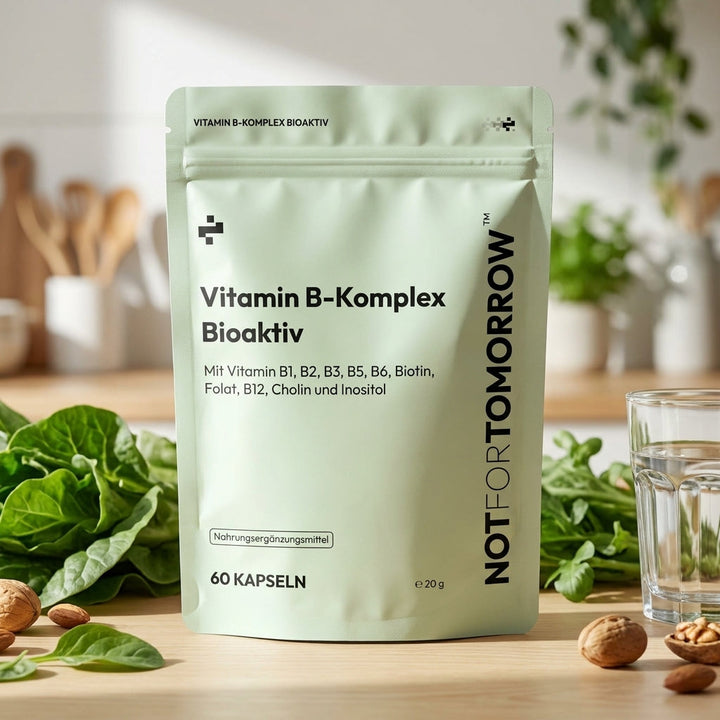
b vitaminsA practical three-product morning supplement routine built around magnesium, a complete B-complex and vitamin D3 with K2. Learn what each contains, what the evidence supports, how to avoid overlap and why a stable meal cue matters more than the clock.
Why supplement form decides how much your body absorbs. Magnesium, zinc and choline forms compared, plus what to check on the label.
antioxidantsIce baths are not just a recovery tool. They are an oxidative stressor. The very thing that makes cold exposure feel transformative,...
circadian rhythmIf you wake up tired no matter how many hours you slept, the problem is rarely the supplement. It is the light...

An accessible guide to bioactive B vitamins: what the active forms are (methylfolate, methylcobalamin, pyridoxal-5-phosphate), how they differ from folic acid and cyanocobalamin, what the eight B vitamins do, and an honest look at safety. This is information, not medical advice.
bone healthWhy vitamin D3 and K2 are so often combined, what each vitamin is, which health claims EU law authorises for them, why the MK-7 form of K2 is used, and an honest look at safety. Information, not medical advice.

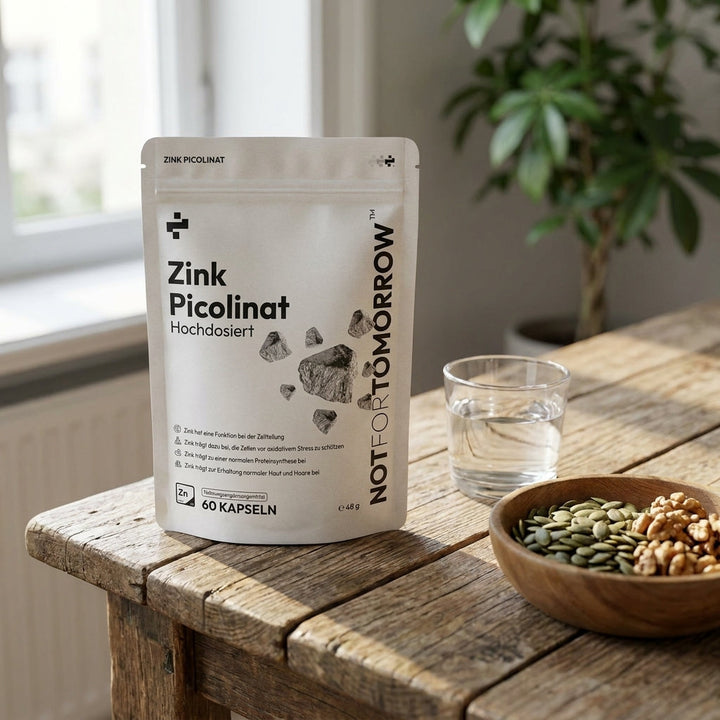
Zinc is sold in several chemical forms, and the form partly determines how well it is absorbed and how it feels on the stomach. This guide compares picolinate, citrate, bisglycinate and oxide, explains what absorption research does and does not show, and provides clear safety notes. Information, not medical advice.
brain healthMagnesium comes in many forms, each of which binds magnesium to a different carrier. The carrier mainly determines solubility and how the body absorbs and tolerates the mineral, not what magnesium does in the body. This article describes the most familiar forms, explains why a product may combine several forms, and provides clear safety information. This is for information only and does not constitute medical advice.
antioxidantsMolecular hydrogen water is simply water with hydrogen gas dissolved in it. This article explains what it is, how effervescent tablets and electrolysis bottles make it, what concentration means, why the gas escapes from an open container, and offers an honest look at the early research. There is no authorised EU health claim for molecular hydrogen, so this describes what it is, not what it does. This is information, not medical advice.
brain energyPossible zinc deficiency signs are not a diagnosis. Learn which clues matter, who is more at risk, how zinc status is assessed, and why total intake and EFSA's 25 mg adult upper level matter before choosing a supplement.
antioxidantsVitamin C is one of the best-known nutrients and is often underrated. It is water-soluble, so the body does not store it and a consistent daily intake is important. This article explains what vitamin C contributes to, how the main forms differ, how gummies, tablets and powder compare, what quality looks like, and provides honest safety information. This is information, not medical advice.
Your cart is empty.
Continue shopping